I need to talk about Facebook.
If you've ever tried to grow a Facebook page from zero, you know the feeling. You post something. You wait. You check. Three impressions. Zero reactions. One share , and it's your mom. You tell yourself it's early, it takes time, the algorithm needs to learn what your page is about. So you post again the next day. Same result. And the next day. And the next.
Weeks pass. You have thirty followers, most of whom are friends who liked the page out of pity. Your posts reach maybe twelve people. You read articles about "Facebook engagement strategies" and they all say the same thing: post consistently, use video, ask questions, engage with your audience. As if you have an audience to engage with.
This was my reality for months.
The Illusion of Social Media Marketing
When I started, I thought social media would be the easy part. Build the page, post some content, people would follow, traffic would flow to the website, commissions would follow. Simple. That's what every "make money online" guide suggested, right? Build an audience on social media, then monetize.
What they don't tell you is that organic reach on Facebook is functionally dead for new pages. When I posted something, Facebook showed it to maybe A fraction of my followers. And since I barely had any followers, About 5% of almost nothing is literally nothing. The algorithm didn't know who to show my posts to because there wasn't enough data. And there wasn't enough data because the algorithm wasn't showing my posts to anyone. It was a chicken-and-egg problem that felt designed to make you pay for ads.
I tried everything the guides suggested. I posted at "optimal times." I used hashtags. I asked questions in my captions. I shared links to my blog posts. I created graphics in Canva. I even tried posting videos, which Facebook's algorithm supposedly favored. Nothing moved the needle. My page sat at thirty-something followers for weeks, then barely crept to fifty, then plateaued again.
The Instagram Experiment
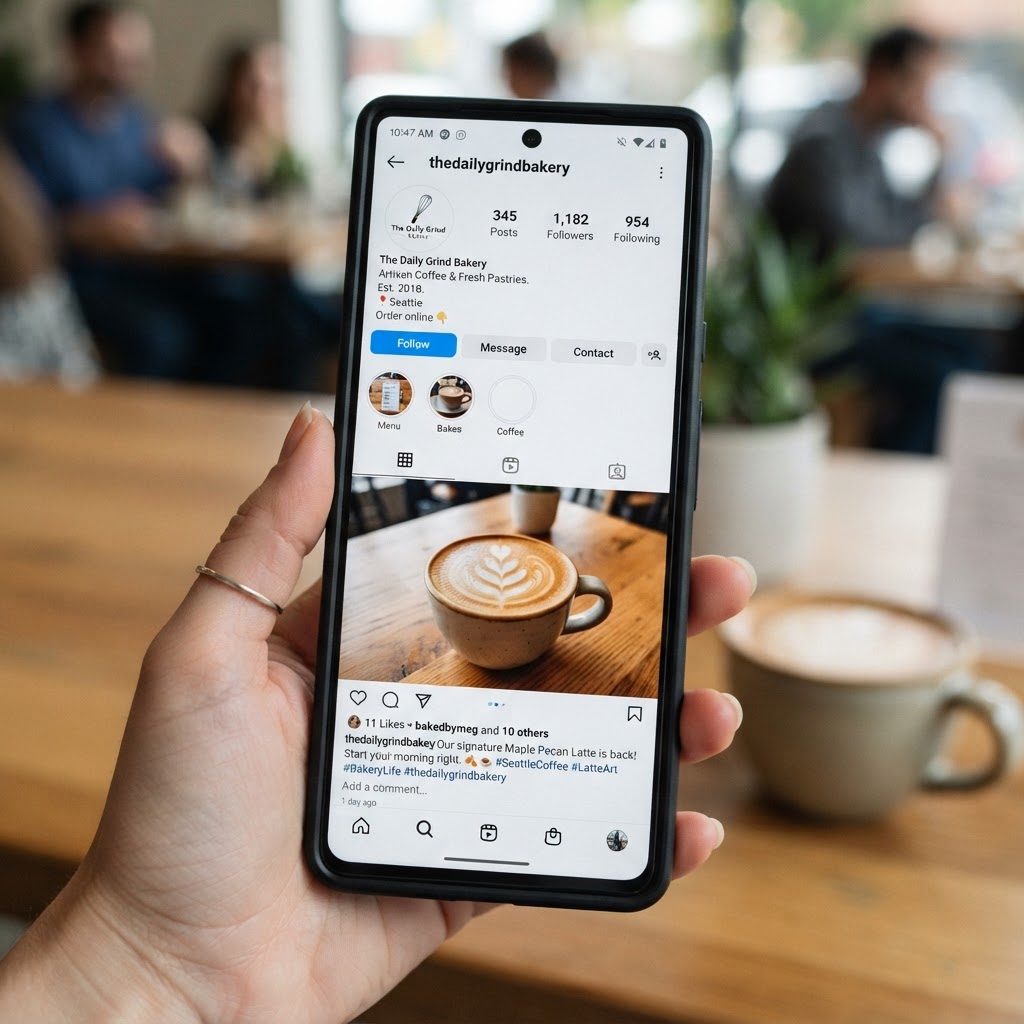
Facebook wasn't working, so I decided to try Instagram. Same brand, different platform. I figured the visual nature of Instagram might work better for health and wellness content . I could post product photos, infographics, motivational quotes. The usual playbook.
The first problem: I didn't have good images. My phone camera was fine, but I wasn't a photographer. I couldn't afford stock photos. I tried using free image sites, but everything looked generic and slightly off-brand. My feed looked like every other wellness page that was using the same free images.
The second problem: Instagram's algorithm was just as unforgiving as Facebook's. Maybe more. At least on Facebook, my posts showed up in a feed alongside content from friends and family. On Instagram, I was competing in the explore page and hashtag streams against accounts that had been posting for years and had tens of thousands of followers.
I gained a few followers here and there. Lost some when I posted too often. Gained a few when a hashtag actually worked. But the growth was so slow it was almost imaginary. One month I went from 47 to 53 followers. I celebrated. The next month I went from 53 to 51. I stopped celebrating.
The Moment I Almost Paid for Ads
There was a week where I almost pulled out my credit card and ran Facebook ads. I'd read the success stories ( "I spent five dollars a day on Facebook ads and grew my page to ten thousand followers in three months." The math seemed reasonable. If I could get followers at fifty cents each, a hundred dollars would get me two hundred followers. That might be enough to kickstart organic growth.
I sat with the ads manager open, my finger hovering over the "publish" button. And then I closed it.
Not because I couldn't afford the hundred dollars : although that was part of it. I closed it because I realized I was about to spend money to drive traffic to a website that I wasn't sure could convert visitors yet. I had one lucky commission. One. I hadn't proven that the site could consistently turn traffic into sales. If I paid for traffic and got zero conversions, I'd have spent money to confirm nothing.
The smarter move, I decided, was to focus on the thing that was slowly starting to work: SEO. Organic search traffic was free. It was slow, but it was free. And the people who came from search were already looking for something specific , they had intent. Social media visitors were browsers. Search visitors were buyers. I needed buyers.
Accepting the Reality
This was one of the hardest lessons in the journey: you can't be good at everything, and trying to be is a recipe for being mediocre at all of it. I wanted to be great at SEO and social media and email marketing and content creation and product research. But I was one person with limited time and zero budget.
So I made a choice. I would focus on what was working — search traffic — and keep social media on life support. A post here and there to keep the pages alive, but no more hours spent trying to crack the Facebook algorithm. No more trying to go viral on Instagram. My energy would go into writing blog posts that answered questions, optimizing them for search, and letting Google do the distribution work.
Social media wasn't dead for VitalEdge. But it wasn't the engine. It was just a storefront window — there for when people looked, but not the thing that would bring people to the door. That was Google's job now.
— Justice
And 12 Impressions Nightmare in Joburg
My journey into Facebook page marketing began with high expectations and ended in complete, undeniable failure. I had spent weeks reading articles and watching video courses on "social media audience building" that all preached the exact same gospel: "Create a Facebook business page, post high-value visual content daily, engage with your followers, and watch your traffic multiply." I eagerly followed this advice to the letter, setting up a polished Facebook business page for my product review blog, complete with custom cover banners, branded profile graphics, and category tags.
For thirty consecutive days, I spent two hours every evening after work designing custom quote graphics, writing detailed post summaries, and scheduling link posts through Meta Business Suite. I maintained flawless consistency. Then came the monthly analytics reality check. I opened the Facebook Insights tab and looked at the performance metrics for my thirty days of hard work: total organic page reach across all thirty posts was a pathetic twelve people. Total post engagement was zero, and total link clicks back to my blog stood at a flat zero. The single page like I had received was from a supportive relative in Durban who had liked the page out of family pity. Facebook had completely ghosted my content.
The R150 Boost Post Trap and Empty Metrics
Feeling desperate to break through the zero-reach wall, I succumbed to Facebook's incessant user interface prompts. Every time I logged into my page manager, bright blue call-to-action buttons would flash beneath my posts: "This post is performing 80% better than recent posts! Boost this post for R150 to reach up to 3,500 people in Johannesburg!" It sounded so effortless and affordable. I entered my Capitec debit card details and authorized a R150 budget for a three-day post promotion campaign.
Three days later, the promotion campaign concluded, and I analyzed the resulting ad report. The R150 payment had indeed generated 2,200 impressions and forty-five new page likes. However, a deeper audit revealed that those page likes came from random, disengaged profiles that displayed all the characteristics of automated click farms. More critically, out of those 2,200 paid impressions, my blog recorded exactly zero outbound link clicks and zero affiliate conversions. I had spent R150 of my hard-earned money to buy vanity metrics on a dashboard that contributed absolutely nothing to my monthly business revenue.
The Death of Organic Page Reach on Meta
This expensive experiment forced me to do deep research into the historical evolution of Meta's newsfeed algorithms. Back in 2012, Facebook business pages enjoyed a healthy organic reach rate of roughly 16%, meaning that if 1,000 people followed your page, 160 of them would see your posts naturally in their newsfeeds. By 2026, independent research showed that organic business page reach had plummeted below 0.2%—effectively zero.
Meta's core business model is built around monetization. Their newsfeed algorithm is intentionally engineered to suppress organic business page reach to force page owners into paying for sponsored ads. Furthermore, Facebook's algorithm prioritizes content that keeps users scrolling inside their walled garden (memes, viral videos, personal family updates) while actively demoting external outbound links that attempt to direct users off Facebook onto independent blogs. Trying to drive free outbound affiliate traffic from a Facebook page in the current landscape is fighting against a stacked multi-billion-dollar algorithm designed specifically to make you fail unless you pay.
Wasting Mobile Data Bundles on Dead Social Feeds
When I added up the true operational costs of running that Facebook page, the financial picture was appalling. To upload high-resolution images, stream video reels, and manage Meta Business Suite, I was purchasing weekly MTN R99 3GB data bundles straight out of my personal budget. Spending nearly R400 per month on mobile data bundles, combined with thirty hours of manual content creation time, produced a net return of R0.00 in affiliate commissions.
Contrast this with my self-hosted WordPress blog. A basic R120 per month web hosting plan running a clean WordPress installation on a custom domain operates twenty-four hours a day, 365 days a year. When an article ranks on page one of Google for a specific keyword query, it receives steady, high-intent organic traffic every single day without requiring daily social posting or paid ad boosts. Social media marketing was eating up my mobile data and mental energy while producing zero commercial yield.
Deleting the Meta Business Suite App and Shifting Strategy
Realizing the massive opportunity cost of continuing down this dead end, I took decisive action. I uninstalled Meta Business Suite from my phone, turned off all Facebook page notifications, and officially abandoned daily social media posting. The sense of relief was immediate. I no longer spent my evenings obsessing over vanity engagement metrics or feeling anxious about empty notification tabs.
I redirected every single hour of reclaimed time back into search engine optimization and long-form content writing. I focused on writing detailed, 2,500-word buyer guides, conducting keyword research using free tools like Google Search Console, and optimizing my site's internal linking structure. Search engine traffic represents active user intent—people actively searching for solutions to specific problems—whereas social media traffic is passive scrolling. Shifting my focus from social feeds to organic search search intent was the single best decision I made for my business sanity and revenue growth.
Giving up on Facebook also freed up mental space to focus on site performance and technical SEO. Instead of spending hours designing social graphics, I spent those hours compressing site images, reducing JavaScript payload sizes, and writing descriptive alt tags for accessibility. Within six weeks of refocusing on search intent, my site's total Google Search Console impressions quadrupled, delivering genuine human readers who were actively looking to buy.




Comments
Post a Comment