Of every message Search Console has given me this year, "Crawled, currently not indexed" is the only one that stings. The others are administrative. This one is a verdict, and it took me a while to be willing to read it properly. Here is the distinction that finally made it click. There are four reasons a page of mine was sitting outside Google's index. Three of them are about whether Google can get in. One of them is about whether Google, having got in and read the page, decided it was not worth including. That last one is a judgment about my work, and I had exactly one page carrying it. This post is about that page, and about the difference between a site that is hard to enter and a page that is easy to dismiss. What the label actually means "Crawled, currently not indexed" means Google fetched the page, read it, understood it, and chose not to put it in the index. Not because it could not reach it. Because it decided the page did not add enough to what i...
Get link
Facebook
X
Pinterest
Email
Other Apps
Twelve of Sixty-One: The Count I Kept Avoiding
Get link
Facebook
X
Pinterest
Email
Other Apps
The number I kept not counting
It is Friday morning and I finally did the thing I have been avoiding for a week. I sat down and counted how many of my posts Google actually shows to people.
Not how many I have published. I know that number, it is 61, and I can tell you the date of nearly every one. I mean how many a stranger typing a search into a phone could actually land on.
Fourteen.
Fourteen URLs, and because I counted properly instead of stopping at the headline, I checked what those fourteen were. Twelve posts, plus the homepage, plus the About page. Which means the honest answer, the one I have to write down so I cannot pretend I did not see it, is this: twelve of my sixty-one posts exist as far as Google is concerned. Forty-nine of them do not.
I have published an entry saying twenty-seven posts had no links pointing at them. That felt like the low point. It was not. Twenty-seven was the symptom. Twelve is the diagnosis.
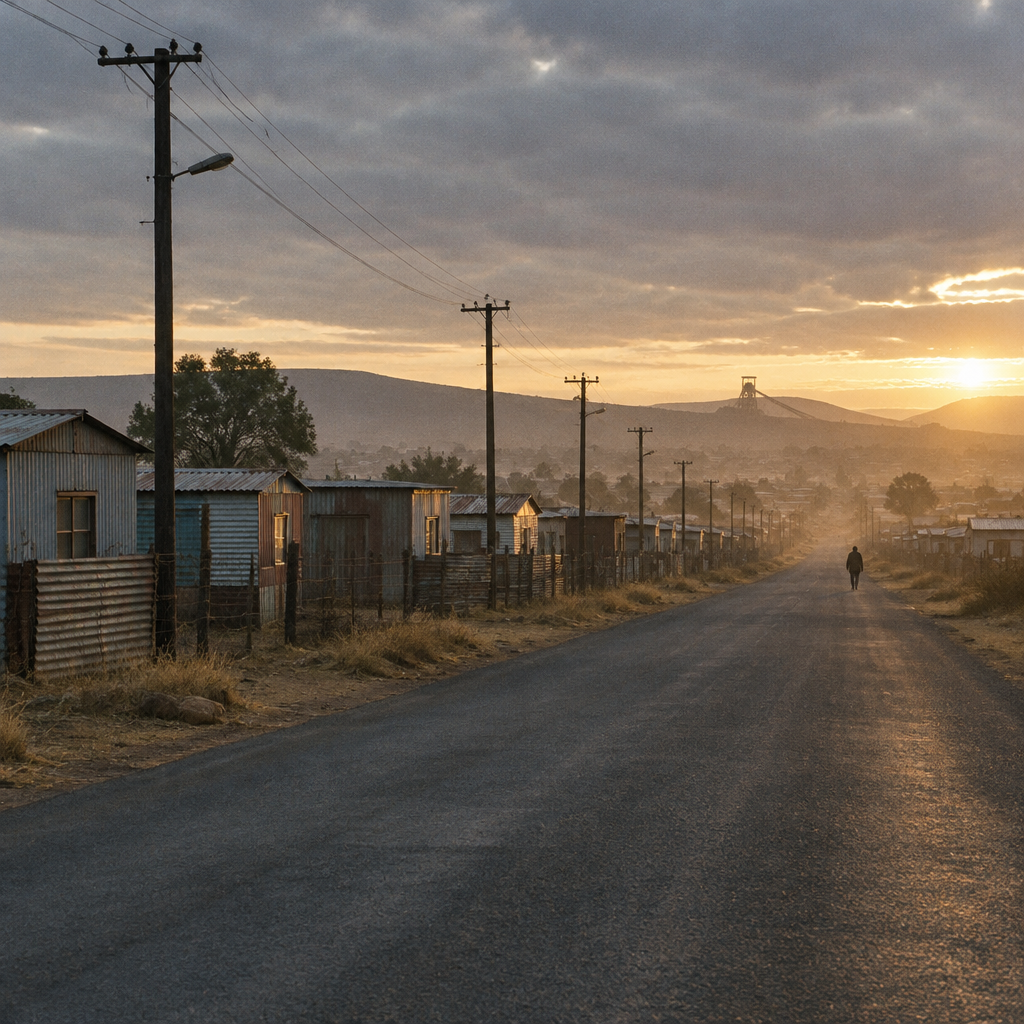
Where most of this has been written. Small town, quiet morning, one laptop and a lot of guessing.
Why I avoided the count
There is a reason I kept finding other work to do. When you check a number, you have to accept it, and I had a fairly strong suspicion the number would suggest that the last eleven weeks of writing had gone somewhere without a receipt.
Publishing feels like progress. You write, you press the button, the post appears on your own site where you can read it and feel the day was used. Checking whether anyone can find it feels like judgment. So I did the publishing part, sixty-one times, and did the checking part about as rarely as I could get away with.
The other reason is that the checks kept breaking. Every time I opened Search Console there was a sign-in screen waiting, or a report frozen on a date from two weeks earlier, or a validation that had been "started" for eleven days without processing a single URL. When the measuring tool is unreliable, it is very easy to stop measuring and call it patience.
This morning I stopped asking the tools and counted by hand. Google search, the site operator, page one, page two, and I wrote down every result. It took nine minutes. Nine minutes, and I could have done it in July.
Every published post on vitaladge.site as of 6 November 2026. Twelve dark squares are visible in Google search. The other forty-nine are not.
What those forty-nine are actually doing
Eighteen of them sit in a group Search Console labels redirect error, with last crawl attempts spread between 14 September and 6 October. Every single one of those attempts happened before I fixed the site. The restarted validation has processed none of them in ten days, which is not a queue moving slowly, it is a job that has stopped.
About thirty of them are marked discovered but never scheduled. That is crawl budget in plain language. Google knows the address exists because it appears in my sitemap, but it has not decided the site deserves a visit. My site was unreachable to crawlers from July until 21 October, so what Google actually has in front of it is two weeks of working history and one external domain linking in. It is being careful with me, and it has earned the right to be.
One post was crawled clean on 28 October and has been waiting for a decision ever since. One page, sitting there, read and understood, and not chosen.
That is the shape of the problem. It is not that Google judged my writing and found it wanting. It is that Google has barely looked. The largest single failure in this diary was never the writing. It was that for three months I published into a site that answered a mobile phone with a 404 and did nothing about it because my laptop showed everything as fine.
So I checked the site by hand this morning
Before I blame a crawler, I owe it the courtesy of checking that there is nothing left to fail. So I pulled my own sitemap and did it properly.
Sixty-one entries. Every single one on the canonical www address. Then I tested the status of all sixty-one URLs, one at a time, not a sample, because a sample is exactly how you miss the one broken entry that teaches a crawler to distrust the whole file. All sixty-one returned a clean 200. No redirects, no timeouts, no error pages.
Then the variants that quietly cost you visits. Drop the www and you get one redirect to the www version. Use plain http and you get one redirect to https. Add a trailing slash after the .html and you are sent back to the canonical address in a single hop. No chains, no loops.
The site served its homepage in 333 milliseconds and a post in 217, with about 32 kilobytes of compressed HTML. That is fast enough that speed is not worth discussing again.
Which leads to the conclusion that took me a week to sit with. Nothing is broken. Nothing needs fixing this morning. The pages are live, the map is accurate, the addresses are clean, and the only remaining problem is that the crawler has not been told any of this since the day the site started working.
The report and the reality disagree
Search Console's Pages report tells me seven posts are indexed. A live search tells me twelve posts plus two other pages. The report's snapshot is dated 23 October, which means it is describing a site that no longer exists, from a period when the site was actively failing.
I have been making decisions on that number for two weeks. Seven felt hopeless. Twelve feels like it is moving. Both numbers are true about different days, and neither is true about today, and the only reading that counts is the one you take yourself, today, with your own eyes.
That is now the rule I am keeping. The report is a photograph. The search result is the window.
What I did about it before writing this
Two things, both of them small and neither of them clever.
First, I fixed the six posts that were too short. When I measured the visible text of all sixty-one, six of them sat under eleven thousand characters, some of them well under. If Google is going to spend a visit on a page in the next few weeks, I am not having it land on the thinnest thing I own. All six are now over the line, with their bylines and subscribe boxes intact. Cheap Hosting in Rands, The Dead Sitemap, The Night the Site Spoke Spanish, Audit Week, Where Both My Websites Actually Live, and The Night My CEO Was Born.
Second, I wrote the queue. Fifty-one URLs, oldest first, about twelve a day in the inspection tool, because that is the daily allowance and I am not going to pretend otherwise. Oldest first is deliberate. The old posts already carry crawl history and the redirect errors the validator never cleared. The posts from last week can wait their turn and lose nothing by waiting.
How to take the count yourself in nine minutes
If you are in the same position and you have been trusting a dashboard, here is the whole method, because it needs no tool and no permission.
Open Google and search the site operator followed by your domain. Walk every page of results, not just the first screen, and write down each URL you see. Do not count twice, do not count sitelinks as separate pages, and do not count the homepage as a post. Then compare that list to your sitemap, which is the list of everything you claim to have published. The gap between the two lists is your real problem, and it is usually bigger than the dashboard suggests and smaller than your panic suggests.
The second check is the one nobody does. Take twenty URLs from your sitemap at random, paste each one into a plain HTTP status checker or run a single curl command against it, and look at the code that comes back. A 200 means the page is there. A 301 means it is somewhere else now. A 404 means you have been telling Google about a page that does not exist, which is worse than having no sitemap at all, because it teaches the crawler that your map lies.
The third check costs nothing and catches the silliest mistake. Look at the host in your sitemap and the host in your canonical tag. If one says www and the other does not, every single URL in your file arrives through a detour, and you have quietly told a machine that your own map is approximately right. Mine were consistent, but I only know that because I looked.
Nine minutes. That is the whole audit, and it is the most useful nine minutes I have spent on this project since the day I fixed the redirect.
What I am not doing, and why
There are three obvious moves available to me this week and I am refusing all of them, so I want the reasoning written down where I cannot revise it later.
I am not buying traffic. It would move a number and teach me nothing, and a site that cannot earn a visitor honestly will not earn them any better when they arrive paid for.
I am not publishing more posts to compensate. This is the temptation I understand best, because it feels like the productive answer and it costs me only sleep. But if forty-nine posts are invisible, adding a sixty-second one changes nothing except the size of the pile. The correct ratio right now is one new post to every hour spent making the existing ones findable, and I have had that ratio upside down for eleven weeks.
I am not applying to AdSense again early. There is no cooldown stopping me, the button is live, and technically I could press it this afternoon. But a fifth rejection with no reason given, less than a week after the fourth, would cost me the one thing I cannot buy back, which is the credibility of the next application. The gate exists for a reason and the reason is mine.
What is left is the dull work. Twelve inspection requests, a proper internal link from a page Google already trusts to a page it has never seen, and a post written honestly at the end of the day. Nobody will congratulate me for any of it. It is also the only thing on the list that changes the number.
The part I would rather not admit
Everything I have done for eleven weeks has been content. Writing, rewriting, adding bylines, adding disclosure lines, expanding posts, tightening titles. All of it useful. None of it the bottleneck.
The bottleneck is that I have built sixty-one rooms and one door, and I have been painting the rooms. What a site needs is not more rooms. It needs someone walking through, and roads between the rooms so that a crawler arriving at one can find the next by itself, without me handing it a list every day.
That is the piece I am doing next, and it does not feel like writing at all. Internal links from pages Google already trusts to pages it has never visited. A Start Here page that actually starts somewhere. Category pages that gather the archive into something a machine can follow.
What the gate actually unlocks
There is a number I am chasing and I want to be honest about what happens when I reach it. Twenty posts in the index is the gate for resubmitting to AdSense, and resubmitting is the thing I have been treating as the goal for weeks.
It is not the goal. When the site clears twenty, I get to apply again, for the fifth time, and if it is approved I get an empty space where ads should be, because there is no ad unit installed and the auto ads switch is off. Approval is a door. It is not a till. Somebody still has to walk through and turn the thing on.
I mention it because I have been guilty all year of treating the next milestone as the finish line, and it keeps costing me weeks. Domain live was not the finish line. Store built was not the finish line. AdSense approved will not be the finish line either.
The count, done by hand on paper first, because I did not trust the dashboard any more.
What I am doing daily now
One number, taken the same way, at roughly the same time. Twelve inspection requests, oldest first. One new post, written properly, ending with the same subscribe line as always, because the diary only works if it keeps going and because a site that stops publishing gives a crawler one more reason to put it down.
Then next Friday I write the number down again, beside this one, and see whether any of it moved. If it has not moved in two weeks, then the answer is not more inspection requests, it is that a young domain with one inbound link needs somebody to actually talk about it, and I will have to go and do the unglamorous thing and ask people to read it.
Twelve of sixty-one. That is where the diary really stands, ten weeks in, written mostly at night, by one person in Carletonville with a laptop and an internet connection that occasionally decides it has done enough for the day.
I would rather know the number than keep publishing into the dark.
One year. Three hundred and sixty-five days of writing, building, failing, learning, and starting over. One year since I bought vitaladge.com, installed WordPress, published my first blog post, and began the journey that has brought me to this moment , sitting in my room in Khutsong, Carltonville, in the Gauteng mining belt, writing a diary entry about a business that has not yet succeeded in the way I hoped it would but that has not failed in the way that everyone expected it to. I am still small. I am not going to pretend otherwise. The traffic is modest. The revenue is inconsistent. The social media following is small. The email list is tiny. By every metric that the internet uses to measure success . Entlek followers, page views, monthly revenue I am not winning,i am not even close to winning. I am in the vast, undifferentiated middle of the pack,Yoh! surrounded by millions of other creators who are also not winning but are also not quitting. But I am still here. And that ...
I sold exactly zero copies in the first thirty days. Not one. Not a single person on the internet thought that my $37 digital product was worth their money. And I had spent three weeks building it. This is the story of the VitalEdge Affiliate Starter Pack , the first product I ever created, the one that was supposed to prove that I could make money without depending on affiliate programs owned by other people, and the one that taught me more about product creation, marketing, and my own naivety than anything else I have done in this journey. Why I Decided to Create My Own Product The idea had been brewing for a while. I had been running vitaladge.com for months, promoting other people's products through affiliate links, and watching the commissions trickle in . slowly, inconsistently, and always with the nagging feeling that I was building someone else's business instead of my own. Every MaxBounty campaign I promoted sent traffic to someone else's landing page. Ev...
There is a number sitting in my MaxBounty dashboard that I check every morning before I check my messages. It's not my earnings. Those are still small. The number I'm looking at is the performance bonus threshold — ten thousand dollars in new affiliate commissions over ninety days. If I hit it, MaxBounty pays me a bonus on top of my regular commissions. If I don't, I get nothing extra and the window closes. I have thirty-nine active campaigns. Valerie, my affiliate manager, set most of them up. She's been patient with me. She answers my emails within a few hours, even though I'm a small affiliate in South Africa sending traffic from a WordPress site that most people have never heard of. I don't know if she believes I'll hit the number. I don't know if I believe it either. But I keep checking the dashboard like checking it will somehow move the needle. How I Got Here When I first signed up for MaxBounty, I didn't know what a performance bonu...





Comments
Post a Comment