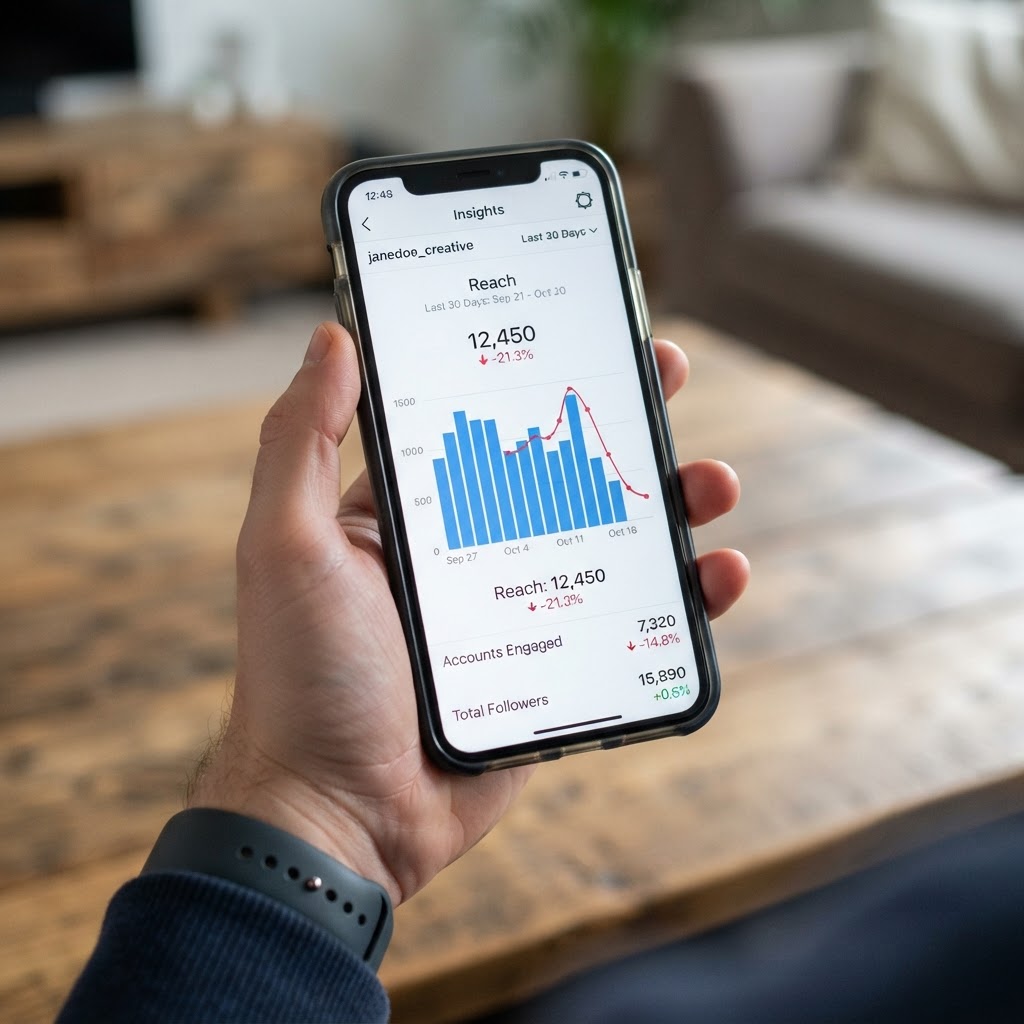
There is no notification for a shadowban. No email, no alert, no message in your inbox saying "we have reduced your reach." The platform does not tell you it has silenced you. You just notice, over the course of days and weeks, that fewer people are seeing your posts. Fewer likes. Fewer comments. Fewer follows. The engagement graph that had been climbing steadily starts to flatten, then dip, then plummet. And you are left to figure out, on your own, what happened and why.
That is what happened to @vitaladge.store, my Instagram account. And it took me two weeks to even realize it was happening.
My Discovery: Something Was Wrong
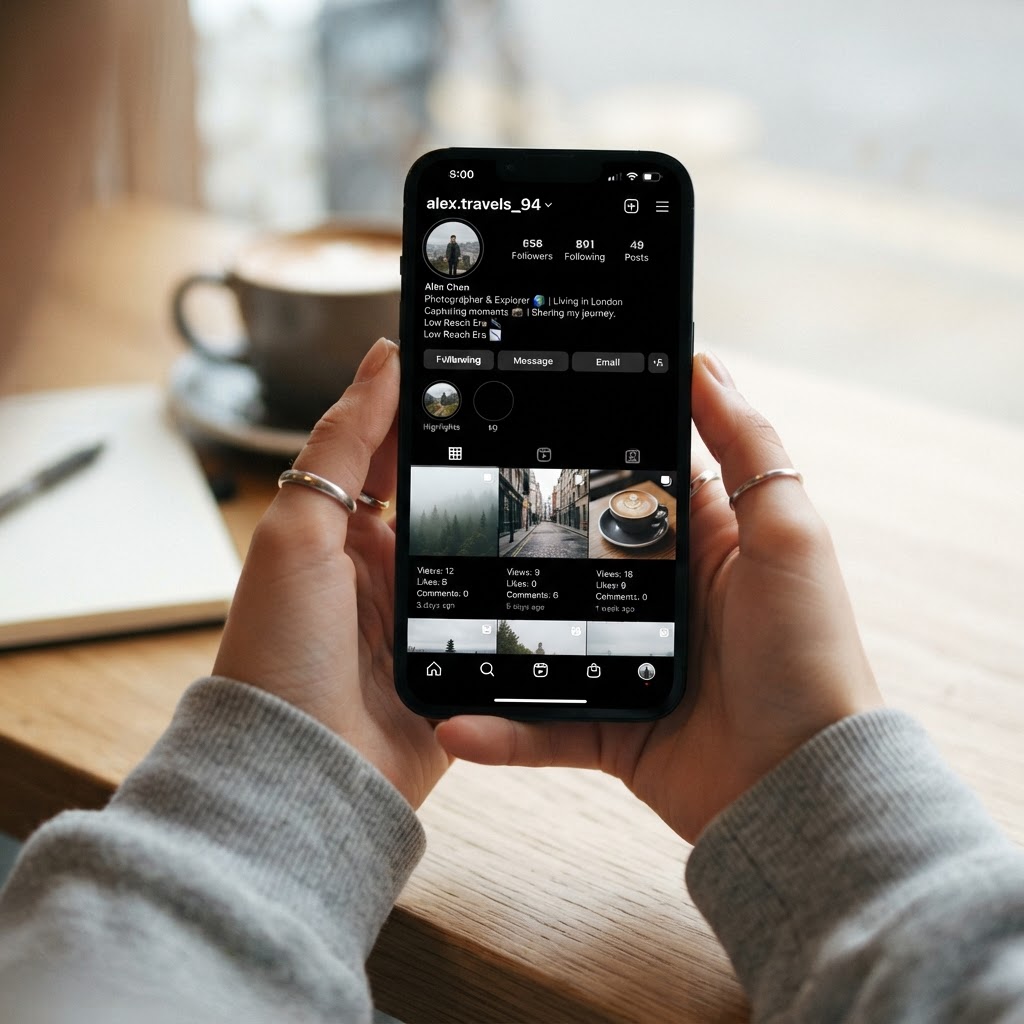
I first noticed it on a Wednesday. I had posted a product image , a clean, well-lit shot of a health supplement I was promoting through MaxBounty . with a caption that included a brief product description and a call to action. Normally, a post like this would get forty to sixty likes within the first few hours. Not viral numbers, but enough to know the algorithm was showing my content to my followers.
This post got eleven likes in twenty-four hours. Eleven. And the comments were zero. Not low ( zero.
I assumed it was a fluke. Maybe the timing was off. Maybe the image was not as good as I thought. Maybe the algorithm was in a weird mood. I posted again the next day : a different product, a different image, a different caption. Seven likes. The day after that: nine likes. By the fifth day, with engagement hovering in single digits, I could no longer pretend it was a fluke. Something had changed.
I checked my follower count. It had not dropped significantly , a few unfollows, but nothing unusual. I checked my posting schedule. I had not changed it. I checked my content style. Same format, same quality, same products. Everything looked the same, but the results were completely different.
What a Shadowban Actually Is
A shadowban is when a social media platform restricts the visibility of your content without notifying you. Your posts still appear in your profile, and your existing followers can still see them (sometimes), but your content does not appear in the Explore page, in hashtag searches, or in the feeds of people who do not already follow you. Effectively, the platform has put a ceiling on your reach . you can only grow as fast as your existing audience engages, and if your existing audience engagement drops, your growth stops entirely.
Instagram does not officially acknowledge shadowbanning in the traditional sense. They have, over the years, introduced features like "account status" that supposedly tell you if your content is being restricted. But in practice, the restrictions happen in ways that are invisible to the user. You do not get a notification. Your account does not show any flags. You just stop growing.
The causes of a shadowban are varied and opaque. Posting too frequently. Using banned hashtags. Getting reported by other users. Engaging in behavior that the algorithm interprets as spammy , like following and unfollowing large numbers of accounts, or posting the same type of content repeatedly, or including too many links in your captions. The algorithm does not explain its reasoning. It just makes a decision, and you live with the consequences.
What I Think Caused It
I spent several days researching what might have triggered the shadowban, and I identified three likely culprits.
First, posting frequency. I had been posting every day for weeks . sometimes twice a day. Instagram's algorithm, I learned, can flag accounts that post too frequently as potential spam accounts. The logic is that real humans do not post every day , only bots and marketers do. By posting daily, I was signaling to the algorithm that I was a marketer, not a person, and the algorithm responded by reducing my reach.
Second, link usage. I had been including affiliate links in my captions . not in every post, but in enough of them that the pattern was detectable. Instagram does not want users leaving the platform, and links in captions are a strong signal that you are trying to redirect traffic. Even though my links were legitimate and my products were real, the algorithm did not distinguish between my affiliate links and a spammer's link farm. A link is a link.
Third, repetitive content. Thinking about it now at my Instagram feed, I realized that my posts had become formulaic. Same product type, same image style, same caption structure. Product image, brief description, call to action, hashtags. Repeat. The algorithm likely detected this pattern and classified my content as low-effort or automated ( which, to be fair, it kind of was. I was posting the same type of content on a schedule because it was efficient, not because it was creative.
The Two Weeks of Silence
For about two weeks, my Instagram was effectively a ghost town. I kept posting because I did not know what else to do : stopping felt like giving up, and I had no strategy for fixing a shadowban. I researched, read articles, watched YouTube videos from people who claimed to have recovered from shadowbans, and tried to piece together a recovery plan.
The advice I found was frustratingly vague. "Stop posting for a few days." "Remove all links from your captions." "Delete your recent posts." "Report the problem to Instagram support." "Switch to a personal account." Each piece of advice came with a disclaimer: "This might not work, and we do not actually know if shadowbans are real."
I tried several of these suggestions. I stopped posting for three days. I removed links from my captions. I varied my content , instead of just product posts, I posted a behind-the-scenes photo of my workspace, a screenshot of my analytics, and a personal update about my entrepreneurial journey. I switched from a business account to a creator account. I engaged with other accounts in my niche . liking, commenting, and sharing their content in a genuine, non-spammy way.
Slowly, over the course of the following week, the engagement started to recover. Not to its previous levels , not immediately . but the trend reversed. Posts that had been getting single-digit likes started getting twenty, then thirty, then forty. The zero-comment posts started getting a few comments. The follower count, which had been flat, started ticking upward again.
I cannot say with certainty which of the changes I made actually helped. It might have been the posting pause. It might have been the content variation. It might have been the account type switch. Or it might have just been time , the algorithm cycling through whatever restriction it had placed on my account and eventually releasing it. Shadowban recovery is not a science. It is a process of elimination conducted in the dark, with no feedback from the platform about whether you are making progress.
What I Do Differently Now
After the shadowban, I changed my Instagram strategy in several ways, and the changes have stuck. I post three to four times a week instead of daily. I never include links in captions . if I need to direct people to my website, I use "link in bio" and update my bio link. I vary my content types: product posts, personal updates, educational content, behind-the-scenes glimpses. I spend thirty minutes a day engaging with other accounts — genuine comments, not generic "nice post" spam. And I check my engagement metrics weekly, so I can catch a shadowban early instead of discovering it two weeks after it starts.
The bigger lesson, though, is one that I keep learning in different forms across every platform I use: you do not control your reach. The platform controls your reach. You can create great content, post consistently, and follow every best practice, and the platform can still decide — for reasons it will not explain, through a process you cannot appeal — to reduce your visibility to near zero. This is the fundamental asymmetry of social media marketing: you invest the work, the platform controls the distribution.
The only protection against this asymmetry is diversification. If Instagram shadowbans you, your business should not collapse. If Facebook reduces your page reach, your traffic should not disappear. If Google deranks your blog, your audience should not evaporate. Every platform is a single point of failure, and a business with single points of failure is a business that is one algorithm change away from a crisis.
I survived the Instagram shadowban. My account recovered, my engagement returned, and I learned to play by the platform's unwritten rules. But I no longer assume that any platform will treat me fairly or consistently. I treat every social media account like it could disappear tomorrow, and I build my business accordingly — diversified, redundant, and owned wherever possible. The shadowban taught me that visibility is borrowed, not earned. And borrowed things can be taken back at any time.
I remember sitting at a small table in a coffee shop in Braamfontein, nursing a R45 flat white just to use their Wi-Fi because my home connection was crawling during Stage 4 load shedding. I handed my phone to a friend and asked him to search for #healthsupplementsza on his Instagram app. I had just posted twenty minutes prior using that exact hashtag. He scrolled through the recent posts section, down and down, but my post was nowhere to be found. We tried three other hashtags I had included in the caption — same result. My post existed on my profile, but as far as the public Instagram search was concerned, it was completely invisible.
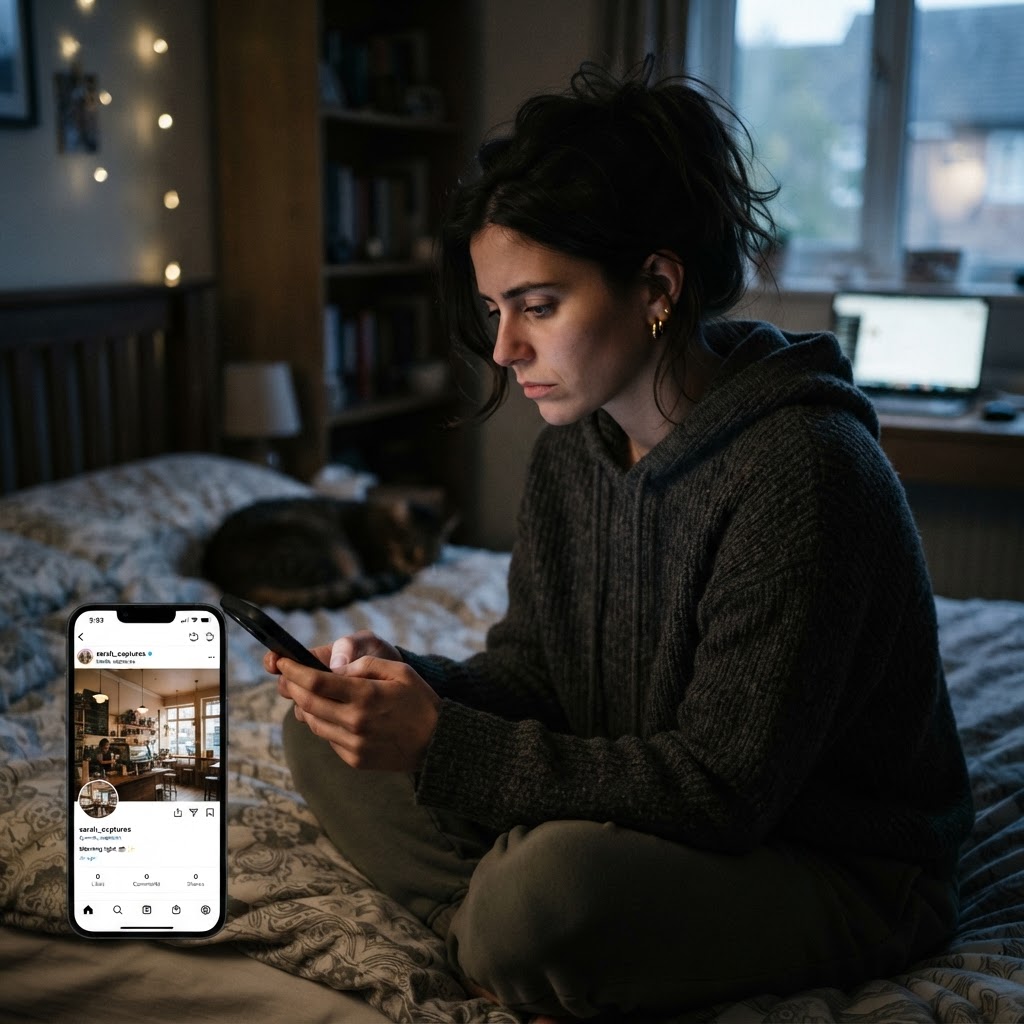
That was the moment the reality sank in. It wasn't just low engagement or a quiet day on social media; Instagram's automated system had flagged my account and shadowbanned my posts. Sitting there with my cold coffee, watching my friend scroll past dozens of other creators while my work remained hidden, was a humbling and sickening feeling. I had spent hours crafting captions, researching hashtags, and designing visuals, only to realize I was shouting into a void that algorithm rules had sealed shut.
Once I accepted that @vitaladge.store was shadowbanned, entlek, I had to figure out what I had done wrong. Entlek, Instagram wasn't going to tell me — they just shadowbanned me silent. I spent three full evenings auditing every single post I had published over the previous two months. I quickly realized my mistakes. Out of sheer convenience and lack of knowledge, I had been copy-pasting the exact same block of 30 hashtags on every single post. To Instagram's anti-spam filters, that repetitive behavior looks identical to a bot. On top of that, I had placed direct affiliate tracking links directly in my bio without routing them through a clean bridge page or landing domain.
I manually went through over 60 posts, editing out the repetitive hashtag blocks and removing any aggressive promotional language. I bought a 10GB Vodacom data bundle for R299 so I could work from my laptop uninterrupted late into the night. It was tedious, unglamorous work, but bit by bit, I cleaned up the profile. I also stopped posting for four consecutive days to let the account reset, resisting the urge to check my stats every ten minutes.
When I finally made my first post after the four-day pause — using only three highly specific hashtags and no links — my friend in Braamfontein checked his search feed again. There it was. My image showed up under recent posts. The shadowban had been lifted, but the experience fundamentally changed how I viewed social media platforms. I realized how dangerous it was to build a business on ground where the rules change without notice and where a single algorithmic flag can erase months of effort.
From that week onward, I stopped relying solely on Instagram feed visibility for my affiliate store. I shifted my primary focus back to search engine optimization on vitaladge.com and began building an email subscriber list using self-hosted tools. Social media became a secondary channel rather than the foundation. The shadowban was painful at the time, but it forced me to build a far more resilient business structure that didn't depend on Mark Zuckerberg's algorithms to keep the lights on.



Comments
Post a Comment