Two hundred and nine rand and ninety-nine cents. That's what Meta charges per month for verified status on a Facebook page. It's the price of a braai lunch for two in Johannesburg, or a month of Netflix, or exactly enough data to stream YouTube for a week on Vodacom. I paid it. This is what happened.

Meta Business Suite . where I managed the VitalEdge page
Why I Did It
The Meta Verified program promises three things: a blue verification badge, increased reach for your posts, and access to premium support. For a small business owner running an affiliate marketing page, the verification badge was the main draw. The psychology is simple ( verified accounts look more trustworthy. When someone sees a blue checkmark next to "VitalEdge," they're more likely to take the product recommendations seriously.
There was also the reach boost. Meta explicitly states that verified accounts get "enhanced visibility" in feed. For someone whose entire marketing strategy depended on organic Facebook reach, even a small boost could mean the difference between a post being seen by fifty people or five hundred.
And the premium support : I'd been fighting with Facebook's New Pages Experience for weeks. The old interface let me schedule posts, upload videos natively, and manage the page properly. The new interface took all of that away and replaced it with a stripped-down Meta Business Suite that couldn't even upload videos. I was hoping verified support might give me a direct line to someone who could fix it.
My Setup Process
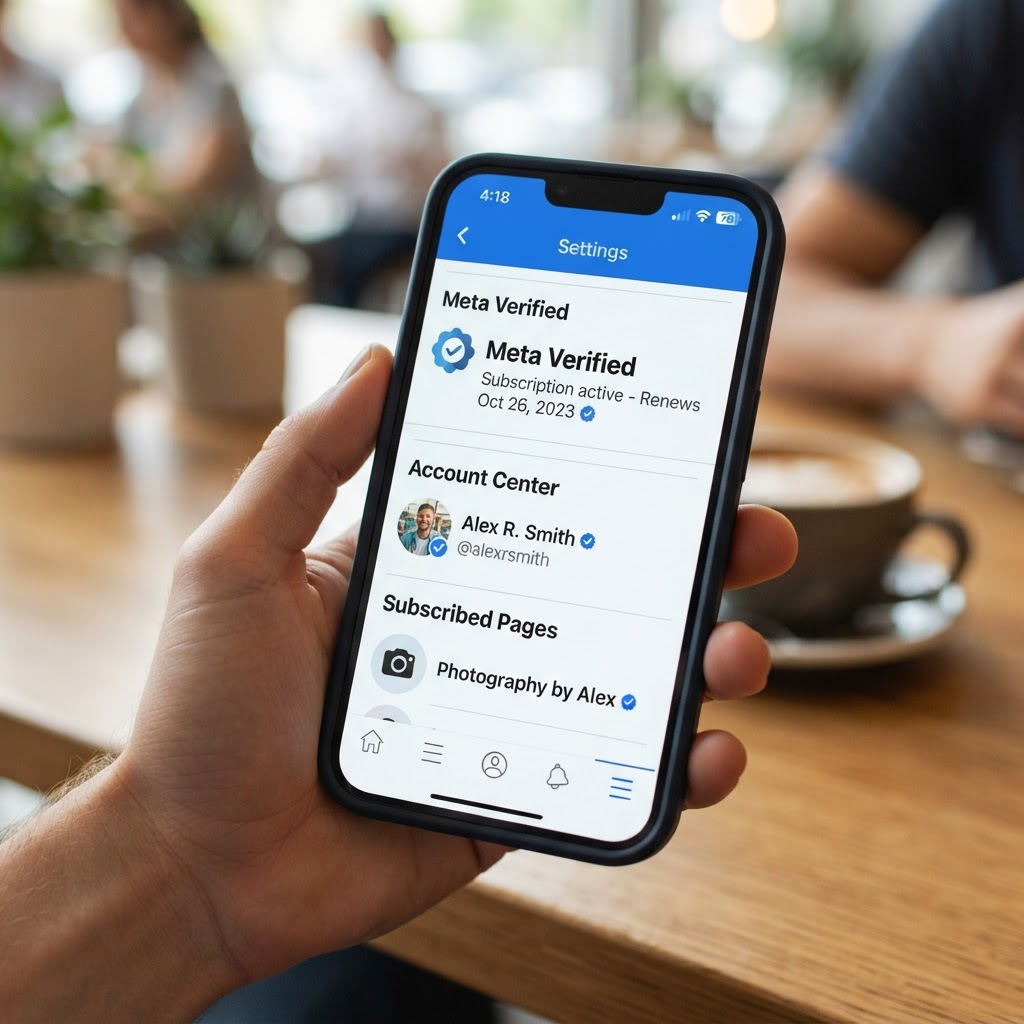
Meta Verified requires a government ID, a phone number, and a matching name on your profile. I submitted my ID, waited three days for approval, and got the badge. The process was smooth , smoother than I expected, actually. No drama, no back-and-forth, just a notification saying I was verified and a charge of R209.99 on my card.
The badge appeared next to my name. I posted a product link and waited for the enhanced reach to kick in.
<
Behind Reality of Verified Reach
Here's what I observed over the following weeks. Before verification, my posts were reaching about 200-300 people organically. After verification, the reach increased to 350-450 per post. That's a meaningful bump . roughly 50% more eyes on each post. For affiliate links, more eyes means more clicks, and more clicks means more potential conversions.
But the increase wasn't consistent. Some posts performed exactly the same as before. Others got a bigger boost. The algorithm seemed to favor posts with images and engagement , the same things it always favored. The verification didn't change the game; it just tilted the table slightly in my direction.
Was it worth R209.99 a month? In raw numbers, the additional reach needed to generate one extra affiliate conversion per month to break even. At my average commission rate, that was achievable but not guaranteed. Some months it paid for itself. Some months it didn't.
The Payment Declined
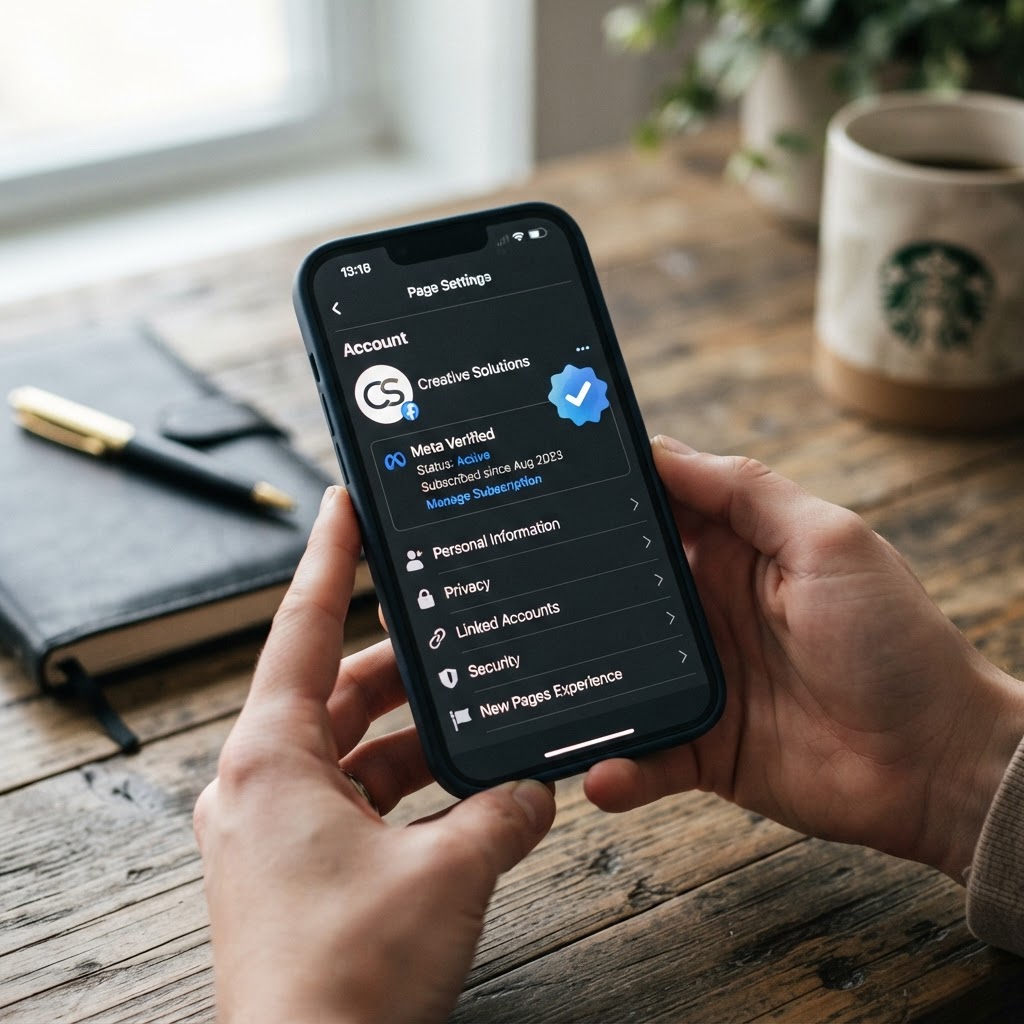
Then, in August, the payment was declined. Meta sent a notification: "Your ZAR 209.99 payment was declined. Try again or use a different payment method." The card I'd used had expired. I needed to update the payment method, but the Meta Business Suite interface made it unnecessarily complicated . five clicks deep into account settings, with a form that kept timing out.
For a week, my verification was in limbo. The badge was still showing, but I got an email saying it would be removed if I didn't update my payment within fourteen days. I was about to lose the one advantage I'd paid for, not because I couldn't afford it, but because a payment system was broken.
What Verification Actually Changed
Honestly, looking at it now, the Meta Verified badge changed less than I hoped and more than I expected. The reach boost was real but modest. The support was nonexistent , I never got a response from premium support about the New Pages Experience issue. The badge itself was nice for credibility but didn't transform my conversion rates.
What it did change was my perception of the page. Having that blue checkmark made me take the page more seriously. I posted more consistently. I engaged more. I treated it like a real business asset rather than a side project. That psychological shift was probably worth more than the algorithmic boost.
But I also learned something about paid verification: it's a recurring cost, not an investment. Unlike content or SEO, which compound over time, the verification fee is a monthly expense that disappears the moment you stop paying. You're renting credibility, not building it.
For now, I'm keeping it. The reach boost helps, and the badge adds a layer of trust that's hard to quantify but easy to feel. But I'm under no illusions . it's a crutch, not a foundation. The foundation is still the content. The content is what converts. The badge just gets more eyes on it.
The Verification Process ( And What It Actually Requires
The Meta Verified signup process is designed to be simple. You upload a photo of your ID, you take a selfie, and you wait. That's what the marketing says. The actual situation more complicated, especially if you're in South Africa and your ID is a green barcoded book that some automated systems don't recognize as easily as a card.
I uploaded my ID at 8 PM on a Thursday. The photo was taken on my Samsung A14, balanced on a stack of books, with the flash off because the reflection made the barcode unreadable. The upload took four attempts because the file size kept exceeding the limit. I had to crop, compress, and re-crop until the system accepted it. By the time the upload went through, it was 9:15 PM and I was already questioning whether the R209.99 was worth this level of frustration.
The selfie verification was worse. The system asked me to turn my head left, then right, then look straight at the camera. The instructions were in English, which was fine, but the voice was automated and it kept glitching. "Turn your head to the left" became "Turn your... head... to..." and then silence. I did the sequence five times before the system accepted it. Each time, mfethu! I felt a little more ridiculous, entlek a grown man sitting in his bedroom turning his head on command for a blue checkmark that might not change anything yoh.
What the Blue Tick Actually Does
Here's what Meta Verified gives you: a blue badge next to your name on Instagram and Facebook, increased account protection, and supposedly increased reach. The badge is the visible part. The protection is the practical part. The reach is the part they advertise but the part nobody can actually prove.
In the first week after verification, I checked my Instagram reach religiously. Every morning, before I even brushed my teeth, I'd open the app and look at the numbers. Monday: 47 accounts reached. Tuesday: 52. Wednesday: 39. Thursday: 41. Friday: 63. The numbers moved, but not in a way that suggested the blue tick was doing anything. They moved the way they always moved , up and down, randomly, without a clear pattern.
After two weeks, I stopped checking. Not because the numbers were bad, but because I realized I was measuring the wrong thing. The blue tick doesn't increase your reach. It increases your credibility. Those are different things. Reach is about how many people see your content. Credibility is about how many people believe what they see. The blue tick doesn't make more people see you . it makes the people who already see you take you slightly more seriously.
Was It Worth It?
R209.99 per month is not a lot of money for some people. For me, at that stage of my business, it was about 5% of my monthly income. A fraction of your income for a blue checkmark is either an investment in credibility or a vanity purchase, depending on whether that credibility translates into anything tangible.
I kept it for three months. During those three months, I noticed one concrete benefit: my DM response rate from other businesses increased. Before verification, I'd send partnership inquiries to brands and get maybe a 10% response rate. After verification, that rate went up to about 25%. Not because my pitch was better , it was the same pitch — but because the blue tick made me look more established than I actually was.
That increase in response rate was worth R209.99 per month. It didn't generate direct revenue, but it opened conversations that wouldn't have happened otherwise. And in a business where every conversation is a potential partnership, and every partnership is a potential commission, the math eventually works — even if it takes longer than you'd like.
I cancelled the subscription after three months. Not because it wasn't worth it, but because I needed the R209.99 for hosting renewals. The blue tick disappeared within 48 hours of cancellation, and with it, the slight credibility boost it had provided. My DM response rate dropped back to about 12%. The conversations that used to start with "oh, you're verified" went back to starting with silence.
Would I do it again? Yes, but only after the business is generating enough revenue that R209.99 feels like an investment rather than a gamble. At the stage I was at, it was a gamble. It paid off in small, indirect ways, but it also added financial pressure that I didn't need. What I actually got from it wasn't "don't pay for verification." The lesson was "don't pay for anything until the business can afford to lose it."
The R209.99 question is really about timing. Verification at month two of a business with zero revenue is a vanity purchase. Verification at month twelve of a business generating R3,000 a month is a credibility investment. The same product, the same price, the same blue tick — but a completely different context. I learned this the way I learn most things: by doing it at the wrong time and realizing it later.
What I really paid of the Blue Tick
What I didn't account for was the opportunity cost. R209.99 spent on Meta Verified is R209.99 not spent on ads, not spent on tools, not spent on the kind of infrastructure that actually moves a business forward. For three months, I was paying for a symbol while neglecting the substance — the content, the SEO, the email list, the things that would still matter long after the blue tick was gone.
When I cancelled, I reallocated the R209.99 to a Canva Pro subscription, which I used to design better thumbnails for my YouTube videos. The return on that investment was measurable within a week — click-through rates on my video thumbnails increased by 15%, and I could attribute that directly to the design improvements. The blue tick never gave me that kind of measurable return.
What I took from that not that verification is bad. The takeaway that every rand you spend in the early days should be judged by one question: does this directly contribute to revenue? If the answer is "maybe, eventually, in an indirect way," then you can't afford it yet. If the answer is "yes, and here's how," then find the money. Which is what actually matters between an investment and a gamble, and I spent three months gambling before I learned it.
If you're reading this and wondering whether to pay for Meta Verified, here's my honest advice: wait. Wait until your business generates enough that R209.99 feels like a small amount. Wait until you have a content strategy that the blue tick can amplify. Wait until you've exhausted the free options — consistent posting, good content, genuine engagement — because those things will always matter more than a badge next to your name. The blue tick is a boost, not a foundation. It multiplies whatever you already have. If you have nothing, it multiplies nothing. If you have something real, it can make that something slightly more visible. But it will never replace the work, and it will never do the work for you.
Related Journey Entries



Comments
Post a Comment