I still remember the exact moment it clicked.
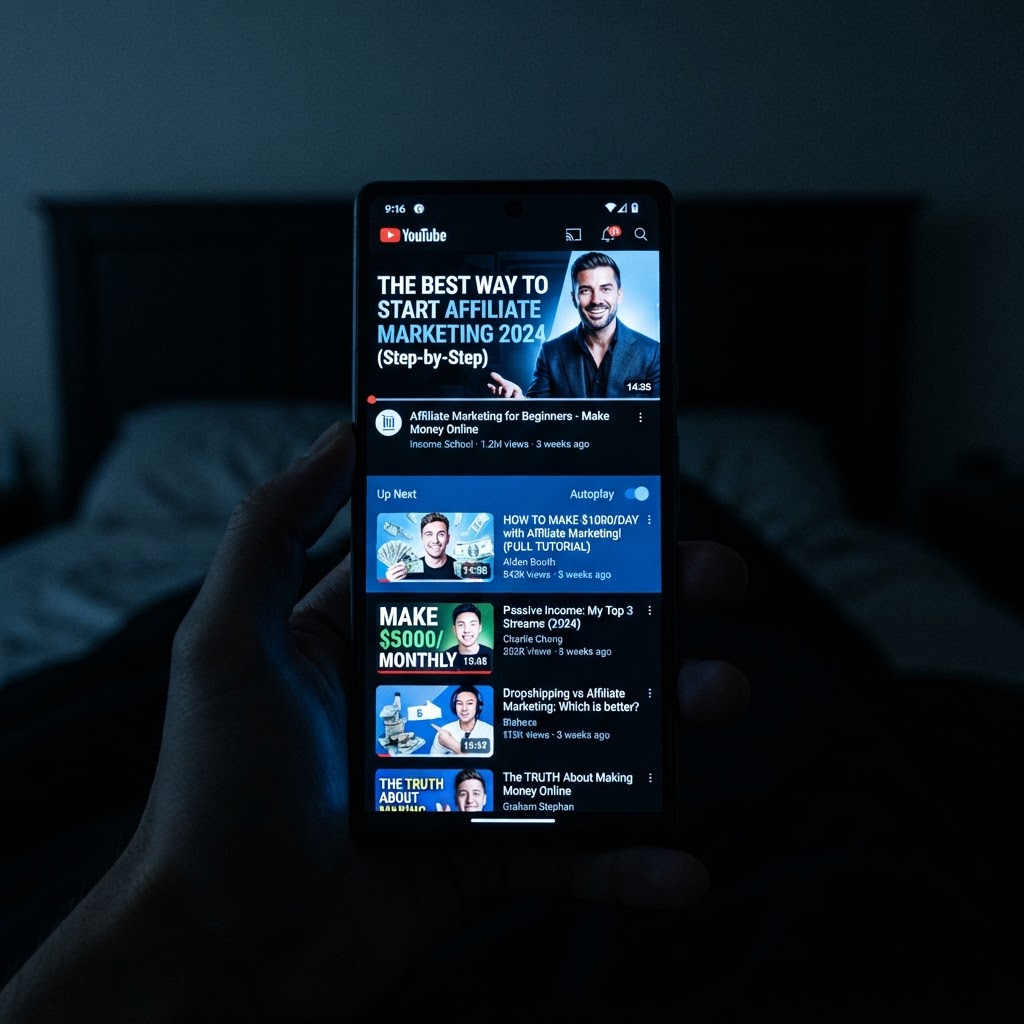
It was late at night, probably around 11 PM, and I was sitting in my room in Khutsong, Carltonville — a township in the West Rand, far from the tech hubs of Sandton or Rosebank in Carletonville scrolling through YouTube on my phone. I had just gotten another AdSense rejection email for vitaladge.com , the third one . and Eish, I was frustrated. Entlek, I was losing hope. Sitting ekasi wondering if any of this would ever work. Then, yoh, I stumbled onto a YouTube video. Not angry-frustrated. That quiet, tired kind of frustrated where you start wondering if maybe the whole thing is a waste of time.
I wasn't watching anything specific. Just letting the autoplay carry me from one video to the next, half-paying attention, half-thinking about whether I should give up on the website idea entirely. And then a video came on ( some guy sitting in his bedroom, talking about how he made his first $100 online. Not through ads. Not through a viral video. Through something called "affiliate marketing."
I had never heard that term before.
What Is This Sorcery?
The concept was simple. So simple it almost felt like a trick. You promote someone else's product. Someone buys through your link. You get a commission. That's it. No inventory. No shipping. No customer service. No creating a product from scratch.
The guy in the video was talking about Amazon Associates : Amazon's affiliate program. He showed his dashboard, pointed to a few dollars in earnings, and said something that stuck with me: "This isn't really about getting rich overnight. It's about building something that earns while you sleep."
While you sleep.
I hadn't slept properly in weeks. I was staying up until 2 or 3 AM writing articles for vitaladge.com, trying to get AdSense approval, trying to get Google to see my site as "valuable content." And here was this guy saying I didn't even need AdSense. There were other ways to monetize a website.
I sat up in bed. Opened a new tab. Started searching.
Going Down the Rabbit Hole
That night, I went down one of those internet rabbit holes that changes the direction of your life. I started with "what is affiliate marketing" and ended up three hours later reading about commission structures, cookie durations, EPC rates, and conversion funnels. Half of it didn't make sense. The other half made so much sense it scared me.
Here's what I learned that night:
1. Companies pay for customers, not clicks. AdSense pays you when someone clicks an ad on your site. Affiliate marketing pays you when someone actually buys something. The payouts are bigger , sometimes way bigger. I saw programs offering $50, $100, even $200 per sale. Per sale. I was getting maybe $0.20 per click with AdSense (when I still had it).
2. You don't need a product. This was the part that blew my mind. I had been spending weeks trying to write enough content to convince Google my site was worthy of ads. But affiliate marketing meant I could promote products that already existed . products with proven demand, existing sales pages, customer support, and delivery systems. All I had to do was connect people to them.
3. There are affiliate networks. You don't have to find individual companies and beg them for a partnership. There are networks , platforms that connect affiliates with hundreds of brands at once. Amazon Associates was the most famous one, but there were others: ClickBank, ShareASale, CJ Affiliate, and one that kept coming up in the videos I was watching . MaxBounty.
MaxBounty intrigued me. The commissions were higher than Amazon. Like, significantly higher. Instead of 3-8% commission on a $20 product (which is maybe $1.20), MaxBounty had offers paying $40, $80, even $200 per conversion. The catch was that they were "CPA" offers , cost per action . meaning you got paid when someone completed a specific action, not just when they bought. Sometimes that action was a free trial signup. Sometimes it was a quote request. Sometimes it was an actual purchase.
I applied that night.
But Application
Getting into MaxBounty wasn't automatic. They actually reviewed applications. They wanted to know where you'd be promoting offers, what your experience was, how you planned to drive traffic. I filled out the form with what I thought were honest answers: I had a website (vitaladge.com), I was planning to promote through blog content and social media, and I was new but motivated.
I almost didn't submit it. I was sitting there with the form filled out, cursor hovering over the submit button, and I thought: "What if they reject me too?" I'd already been rejected by AdSense three times. Another rejection felt like it would break something in me.
But then I thought about the guy in the video — some random fooza on YouTube who changed my life. He started somewhere too. Everyone starts somewhere. And the worst they can say is no.
I clicked submit.
Waiting
The next two days were torture. I checked my email every hour. Every notification sound made my heart jump. I kept thinking they'd send a rejection ( "Sorry, your site doesn't meet our standards" : the same language Google used.
But on the second day, I got an email. Not a rejection. An approval.
"You've been approved for a MaxBounty account."
I read it three times to make sure I wasn't dreaming. I was in. I had access to hundreds of affiliate offers, some paying real money per conversion. Not $0.20 per click. Real money.
That email changed everything. It was the first time in this whole journey that someone , a company, a platform, anyone . looked at what I was doing and said: "Yes, you're good enough."
AdSense had told me no five times. MaxBounty told me yes on the first try.
Inside First Campaign
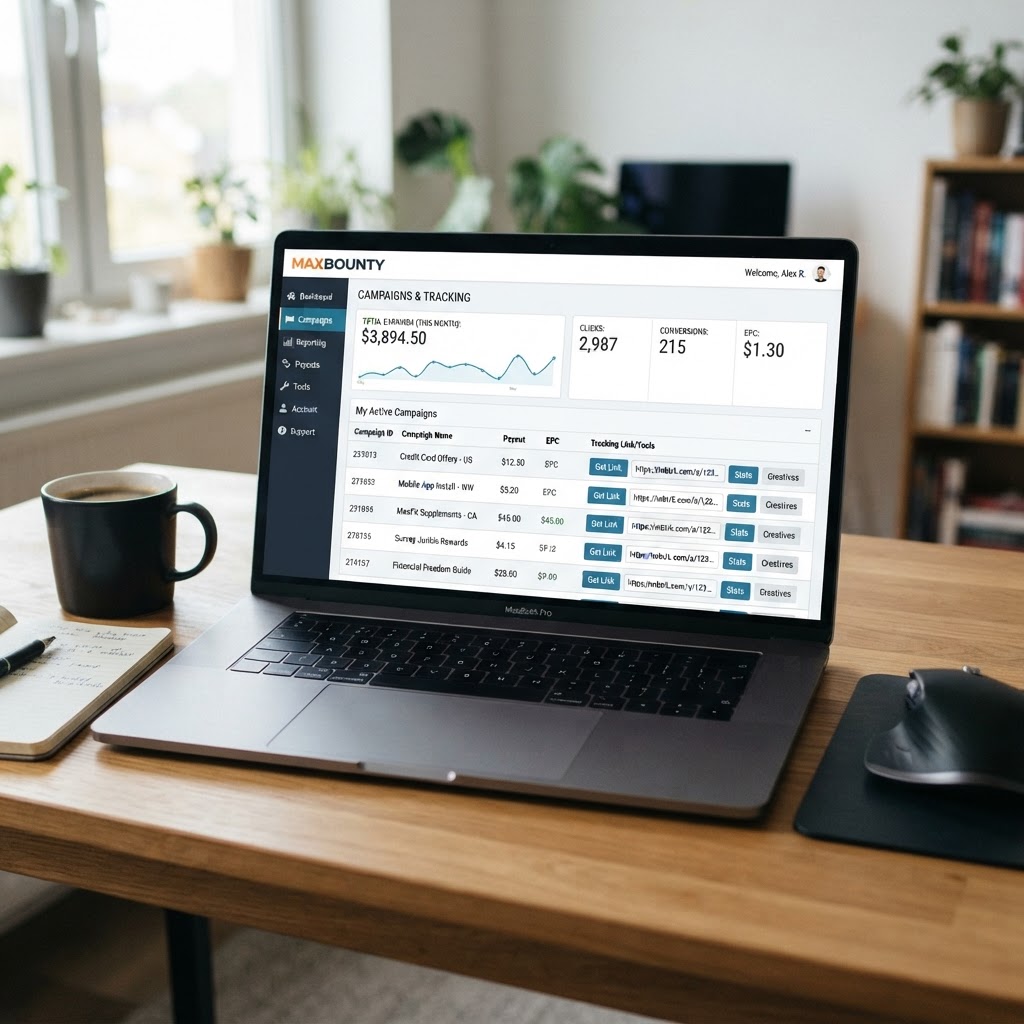
I logged into MaxBounty and was immediately overwhelmed. There were hundreds of offers. Health supplements. Dating sites. Software tools. Financial products. Each one had different commission rates, different traffic requirements, different countries allowed.
I spent a full day just browsing. Reading descriptions. Comparing payouts. Trying to figure out which ones would work on vitaladge.com.
The first campaign I applied for was a health supplement , something for blood sugar support. I chose it because the payout was decent ($30+ per conversion) and because health was one of the topics I'd already been writing about on the site. It felt like a natural fit.
The campaign required approval too. Some campaigns on MaxBounty accept any affiliate. Others want to see your traffic sources first. I submitted my application with a link to vitaladge.com and a short description of how I planned to promote it.
Approved within hours.
I took the tracking link, created a product page on vitaladge.com, wrote a short description, and hit publish. It wasn't elegant. It wasn't polished. But it was live. For the first time, my website had something on it that could actually generate revenue . not $0.20 ad clicks, but real affiliate commissions.
Inside Reality Checkh2>
The part that stuck with me nobody tells you about that first campaign: nobody bought.
Days passed. Then a week. I checked my MaxBounty dashboard obsessively. Zero clicks. Zero conversions. Zero earnings. The link was live on my site, but nobody was clicking it. And even if they were clicking, nobody was buying.
This was the part of affiliate marketing that the YouTube videos didn't cover. They showed you the dashboard with earnings. They showed you the lifestyle. They didn't show you the weeks and months of zero results that come before those earnings , if they ever come.
I started to understand that having a link on a website wasn't enough. I needed traffic. Real traffic. People who were actually interested in what I was promoting. And not just any people . people in the right countries (some offers only accepted traffic from the US, Canada, UK), people with the right intent (people looking to buy, not just browsing), and people who would actually complete whatever action the offer required.
My website had maybe 20 visitors a day. Most of them were probably me, checking if the site was still up.
I Shift
t
That first failed campaign taught me more than any YouTube video could have. It taught me that affiliate marketing isn't about slapping links on a page and waiting. It's about:
Understanding your audience. Who are they? What do they need? What problems are they trying to solve? If you don't know, you can't promote anything effectively.
Choosing the right offers. Not every high-paying offer is a good fit for your site. A $200-per-lead offer is worthless if your audience isn't interested in what it's selling.
Driving targeted traffic. This is the real game. Not just any traffic ( traffic from people who are likely to convert. That means SEO, social media, email lists, content marketing, and maybe paid ads down the line.
Building trust. People don't click links from strangers. They click links from people they trust. And trust comes from genuine, helpful content — not from obvious sales pitches.
I went back to the drawing board. But this time, I wasn't writing articles to impress Google's algorithm. I was writing to attract real people. People who might actually click a link, try a product, and maybe — just maybe — earn me my first commission.
Now that some time has passed
That night in my room in Carletonville, watching a random YouTube video about affiliate marketing, was the night this whole journey pivoted. Before that night, I was trying to build a website that would impress Google. After that night, I was trying to build a website that would serve people.
And ironically, serving people turned out to be the thing that actually works. Not because I figured it all out — I'm still figuring it out — but because it shifted my mindset from "what does the algorithm want?" to "what do people need?"
That gap is everything. And it took a random YouTube video at 11 PM to show me.
This is Part 4 of "My Journey to the Dream That Never Came Through" — an honest diary about building an online business from a small town in South Africa, with no budget, no team, and no idea what I was doing. New posts come out regularly. If this resonates with you, you're not alone.
The Carletonville Night: Shifting from Ad Pennies to Real Value
That late night in Carletonville when I stumbled across affiliate marketing on YouTube was the single biggest turning point of my online venture. Up until that night, my entire mental model of making money with vitaladge.com was based on Google AdSense. I was obsessed with getting approved so I could place banner ads on my site and earn R0.50 or R1.00 every time a visitor accidentally clicked an ad. But AdSense had rejected my application three times, citing 'low value content', and I was feeling completely defeated.
Watching that video in my small room, with the cool winter air drifting in through the window and my old laptop fan whirring on my bed, opened a completely new perspective. The creator explained that instead of begging Google to pay pennies for ad clicks, you could partner directly with companies whose products you actually use and trust. If a reader buys a tool or service through your link, the company pays you a substantial commission — $20, $50, or even $100 per sale. The math immediately made sense. To make R2,000 from AdSense required tens of thousands of views; to make R2,000 from affiliate marketing required just two or three quality conversions.
The Bureaucratic Scramble to Register for Global Networks
The very next morning, energised by this discovery, I began applying to affiliate networks like MaxBounty, ClickBank, and Impact. Being based in South Africa added several extra hurdles that standard tutorials never mentioned. I had to learn how to fill out U.S. tax forms like the W-8BEN online, set up a Payoneer account to receive foreign currency payouts, and link it to my local Capitec savings account so USD could be converted into Rand.
I still remember the nervous anticipation when a network manager from MaxBounty scheduled a phone call to verify my application. I stood outside in the quiet street in Carletonville, carefully answering questions about my traffic sources and promotional strategies. When the approval email arrived two days later, granting me access to thousands of affiliate offers, it felt like I had unlocked a door into a global economy right from my bedroom.




Comments
Post a Comment