Everyone thought I was crazy. Including me.
Checking AdSense on the WorldScope blog
I'd just been rejected by AdSense twice. My first website, vitaladge.com, had 200+ articles and wasn't getting approved. My YouTube channel was growing at a pace that could generously be described as "glacial." And my affiliate income was real but small , enough to prove the model worked, not enough to quit my day job.
So naturally, I started a second blog.
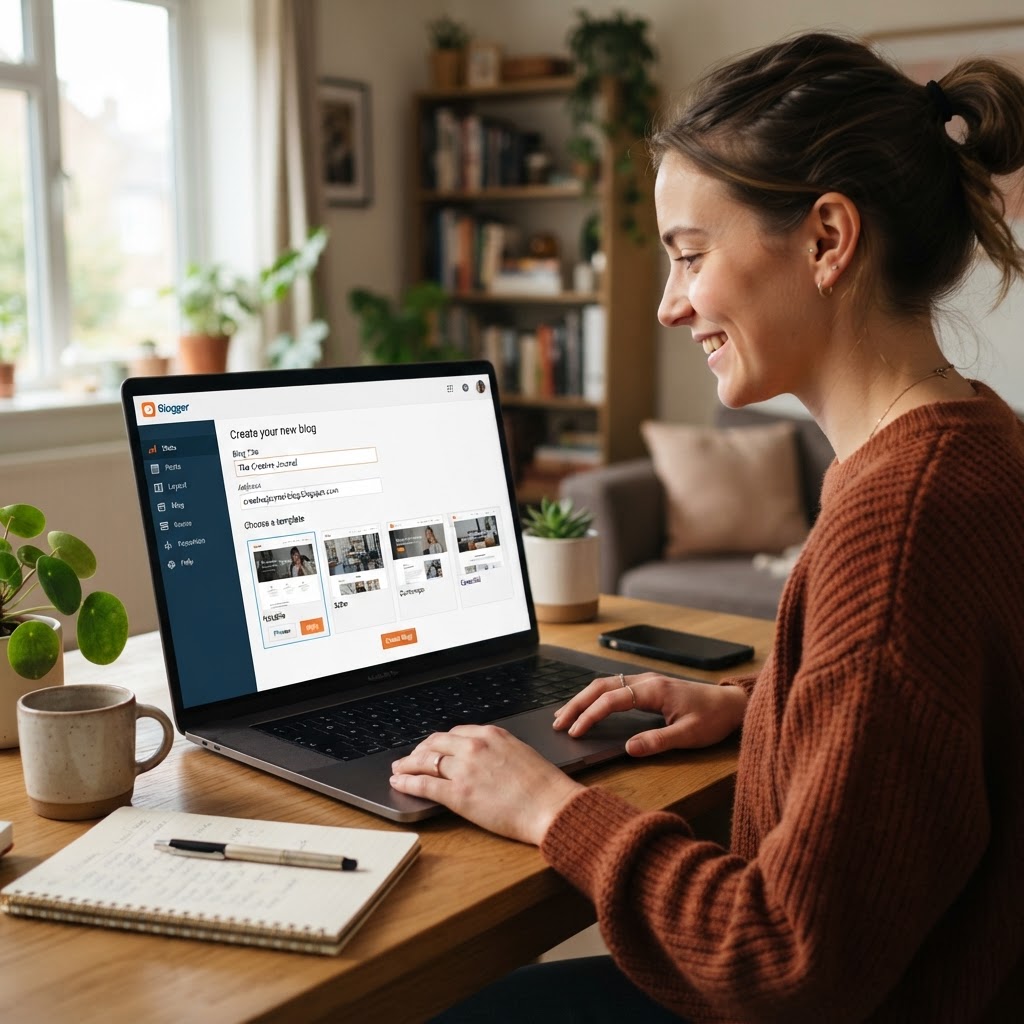
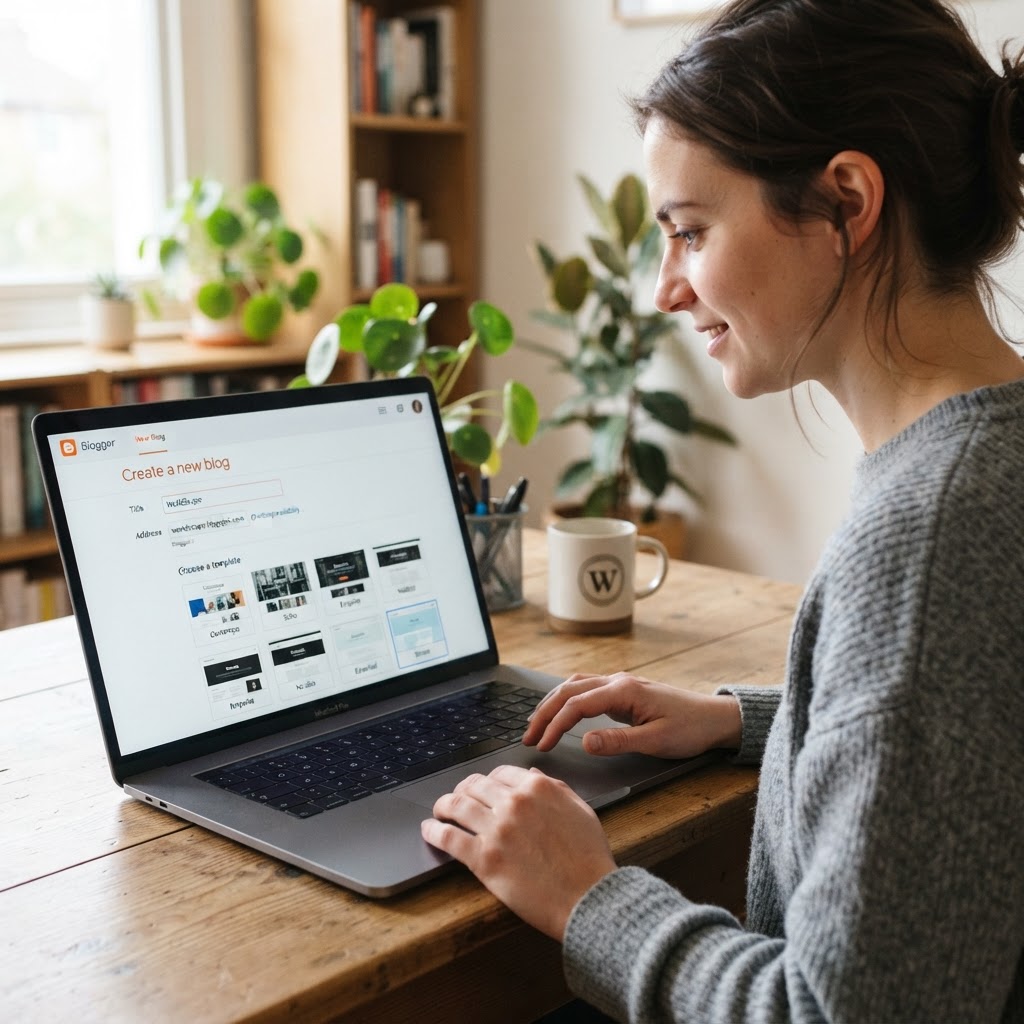
I called it WorldScope. Different name, different niche, different platform. vitaladge.com was built on WordPress and hosted on Hostinger. WorldScope would be built on Blogger . Google's own platform ( and use a custom domain: vitaladge.site. The logic was simple: if Google kept rejecting my WordPress site, maybe they'd be more generous toward a site hosted on their own platform.
The Niche
vitaladge.com was about health supplements and affiliate products. That niche is crowded. Every affiliate marketer and their cousin has a health blog. The competition for search rankings is brutal, and Google's quality guidelines for health content (they call it YMYL : Your Money or Your Life) are strict. They hold health sites to a higher standard than almost any other category.
WorldScope would be different. Instead of health products, I'd write about geography. Countries, continents, cultures. Educational content , the kind of stuff that shows up when a student searches for information about a country for a school project. Not high commercial intent, but high search volume. Evergreen content that doesn't expire when a product goes out of stock.
And here's the key part: it would be genuinely useful. Not keyword-stuffed filler designed to host ads. Real articles about real places, with real information. History, languages, cuisine, sports, music. The kind of content that a person might actually want to read.
The Plan
I planned it like a military operation. Twelve articles per country, following a template: history, states/provinces, languages, culture, technology, economy, cuisine, beauty, contributions to the world, tourism, sports, music. Twelve articles that together would cover everything a curious person might want to know about a place.
I started with Japan. Eleven articles about Japan . I skipped one because I couldn't find enough unique material for it. Then India: twelve articles. Then China, Brazil, USA, Egypt, Nigeria, UAE, South Africa, England, Israel. One country per day. Twelve articles per day. At the peak, I was publishing more in a single day than most bloggers publish in a month.
Then I expanded to continents. Africa, Europe, Asia, North America, South America, Oceania, Antarctica. Another twelve articles each. By the time I was done, WorldScope had over 200 articles , a full encyclopedia of world geography.
The Reality
Let me tell you what it was actually like to produce that volume of content. It wasn't pretty. Some of the articles were good . the ones about countries I found interesting, the ones where the research pulled me in and I genuinely wanted to learn more. Japan was like that. South Africa was like that. But some of the articles were a grind. I was writing about continents I'd never visited, about cultures I only knew from Wikipedia, about histories I was summarizing from other people's summaries.
And I'll be honest , I used AI to help. Not to write the articles from scratch, but to generate drafts that I'd then edit, expand, and restructure. The AI was a tool, not the author. I chose the topics, I verified the facts, I wrote the analysis, I added the personality. But I'd be lying if I said every word came from my brain. Some of them came from a language model that I directed and refined.
That's the same approach I take with this diary, by the way. I think out loud, I tell the story, and AI helps me structure it into something readable. The experiences are mine. The emotions are mine. The opinions are mine. But the typing? Sometimes the typing is collaborative.
The Results So Far
WorldScope got its first AdSense approval faster than vitaladge.com ever did. Being on Blogger probably helped. Having genuinely educational content probably helped more. The articles were long, well-structured, and covered topics that people actually search for.
But The part that stuck with me about AdSense approval . it's not a money button. It's a permission slip. It says "you're allowed to show ads." It doesn't say "anyone will see them." And for a new blog with no domain authority, no backlinks, and no audience, the traffic is still small. The first month, WorldScope got a few hundred views. The second month, a few hundred more. It's growing, but it's not paying rent.
I'm not discouraged. I'm patient. WorldScope is a long-term play. The content is evergreen ( articles about the history of Japan won't expire. The search volume is consistent — students will always need geography information. And the domain will build authority over time. Every month that passes, every article that gets indexed, every backlink that appears — it all compounds.
What It Taught Me
Starting WorldScope taught me something important about this business: you need more than one bet. vitaladge.com is my commercial play — affiliate links, product reviews, things that make money. WorldScope is my traffic play — educational content that builds an audience and earns ad revenue. They serve different purposes, target different people, and succeed through different mechanisms.
If I'd put everything into vitaladge.com and given up after the AdSense rejections, I'd have nothing. By spreading the risk across two sites, two niches, two platforms, two revenue models — I gave myself a backup plan. And in this business, a backup plan isn't pessimism. It's survival.
The Financial Bet: Buying WorldScope Domain on Namecheap
Deciding to launch WorldScope as a secondary blogging project wasn't a choice I made lightly. At the time, VitalEdge was just starting to gain traction, but I realized that relying entirely on a single domain carried inherent strategic risks. On a warm afternoon in Carltonville, sitting at my desk with my Capitec debit card in hand, I logged onto Namecheap and purchased the worldscope domain name for $10.98, which converted to exactly R198.45 after bank fees. To keep infrastructure overhead near zero, I didn't buy a new web hosting plan; instead, I added WorldScope as an add-on domain inside my existing Hostinger shared hosting cPanel dashboard.
By leveraging the single Hostinger account, both sites shared the same server resources, MySQL database instance, and SSL certificates. On paper, this was a brilliant financial decision—I expanded my digital footprint for less than R200 in total out-of-pocket costs. However, sharing a low-cost shared hosting server meant that any CPU spike or traffic surge on VitalEdge directly impacted the performance and page load speeds of WorldScope, creating a delicate balance between budget management and server stability.
Setting up the add-on domain inside cPanel required creating a new root document folder /public_html/worldscope, creating a separate MySQL database with unique user permissions, and installing a second instance of WordPress via Softaculous auto-installer. Seeing two distinct domain names operating off a single R59/month hosting account felt like a major technical accomplishment for a self-taught builder working out of Johannesburg.
Targeting High-CPC Global Markets from South Africa
The primary motivation behind WorldScope was targeting high-value advertising markets in North America, Western Europe, and Australia. In South Africa, local Google AdSense Cost Per Click (CPC) rates for general lifestyle and technology topics can be dishearteningly low—often averaging between R0.80 and R2.50 ($0.04 to $0.14) per click. For a blog getting 1,000 visits, that might translate to barely R50 in total ad revenue. In contrast, financial tech, software reviews, and enterprise productivity topics in the US market frequently command CPC rates ranging from $2.00 to over $8.00 per click.
By structuring WorldScope around international software tools, global digital workflows, and cloud platforms, I aimed to capture tier-1 search queries that yield significantly higher AdSense RPMs (Revenue Per Mille). Earning $5.00 for every thousand impressions on WorldScope compared to $0.50 on local traffic meant that even with lower total pageviews, WorldScope could potentially match or exceed the net revenue of my first site while requiring fewer total articles over time.
I spent days researching keyword queries on free SEO tools like AnswerThePublic and Google Keyword Planner, filtering for US and UK search volumes. I identified specific content gaps around niche software tools where user query intent was high but competition from major media outlets was surprisingly low. Crafting content for an American or European audience while sitting in my apartment in Marshalltown required careful language research, using international English terminology and avoiding local South African colloquialisms in the technical guides.
The Operational Chaos of Managing Dual WordPress Sites
What I completely underestimated was the sheer volume of mental context-switching required to maintain two distinct blogging properties simultaneously. Running one blog while holding down a full-time job in Johannesburg is a tough task; running two is an operational marathon. My daily routine suddenly doubled in complexity. I had to manage two separate WordPress admin panels, monitor two sets of Google Search Console properties, perform keyword research across different niches, and maintain separate content calendars in Google Sheets.
On weeknights, after finishing dinner and clearing my desk, I would split my writing time: 8:00 PM to 9:30 PM was dedicated to writing an affiliate product comparison for VitalEdge, and 9:30 PM to 11:00 PM was spent researching technical software integration guides for WorldScope. By midnight, my brain was completely fried. I was constantly switching between writing voices, checking different keyword ranking trackers, and managing plugin updates across multiple site dashboards. The risk of burn-out became very real very quickly.
Technical Hurdles: SSL Certificates, DB Limits, and Caching
Running two active WordPress installations on a shared hosting account with 1024MB RAM limit quickly exposed technical bottlenecks. Whenever both sites received automated updates or background crawler visits at the same time, Hostinger's cPanel error logs would light up with 508 Resource Limit Reached notices. Database query times slowed down, causing admin dashboard pages to take over ten seconds to render.
To resolve these technical hurdles without spending money on hosting upgrades, I implemented strict optimization protocols across both properties:
- Installed LiteSpeed Cache plugin on both sites, configuring server-level page caching and CSS/JS minification.
- Offloaded all media image files to Cloudflare's Polish image optimization service and WebP conversion.
- Cleaned up database tables using phpMyAdmin, removing thousands of auto-saved post revisions and spam comments.
- Configured Cloudflare SSL/TLS encryption in Full (Strict) mode to reduce server SSL handshake overhead.
Hard Lessons on Focus vs. Premature Scaling
Thinking about it now at the WorldScope experiment, it taught me one of the most critical lessons in digital entrepreneurship: depth on a single proven property almost always beats shallow execution across multiple projects. When you split your limited time, energy, and resources between two sites before either has reached full stability, you risk slowing down the growth of both. VitalEdge needed 100% of my focus to cross the threshold into substantial monthly income, but WorldScope pulled half of my weekly writing hours away.
While WorldScope proved that targeting high-CPC international keywords is a viable financial strategy, it also forced me to confront my operational capacity limits. As a solo builder working out of Johannesburg with limited bandwidth and power constraints, focus is your most valuable asset. Scaling should only happen when your first asset is fully automated or generating enough cash flow to hire freelance writers and editors to handle routine content production.

Comments
Post a Comment