Two domains. Two websites. Two different platforms. Two sets of hosting, two sets of content, two sets of problems. And for the first six months, zero profit from either. This is the financial reality of running an online business before it becomes profitable , the part that the gurus skip in their "start your online business today" courses.
Checking site status from my phone
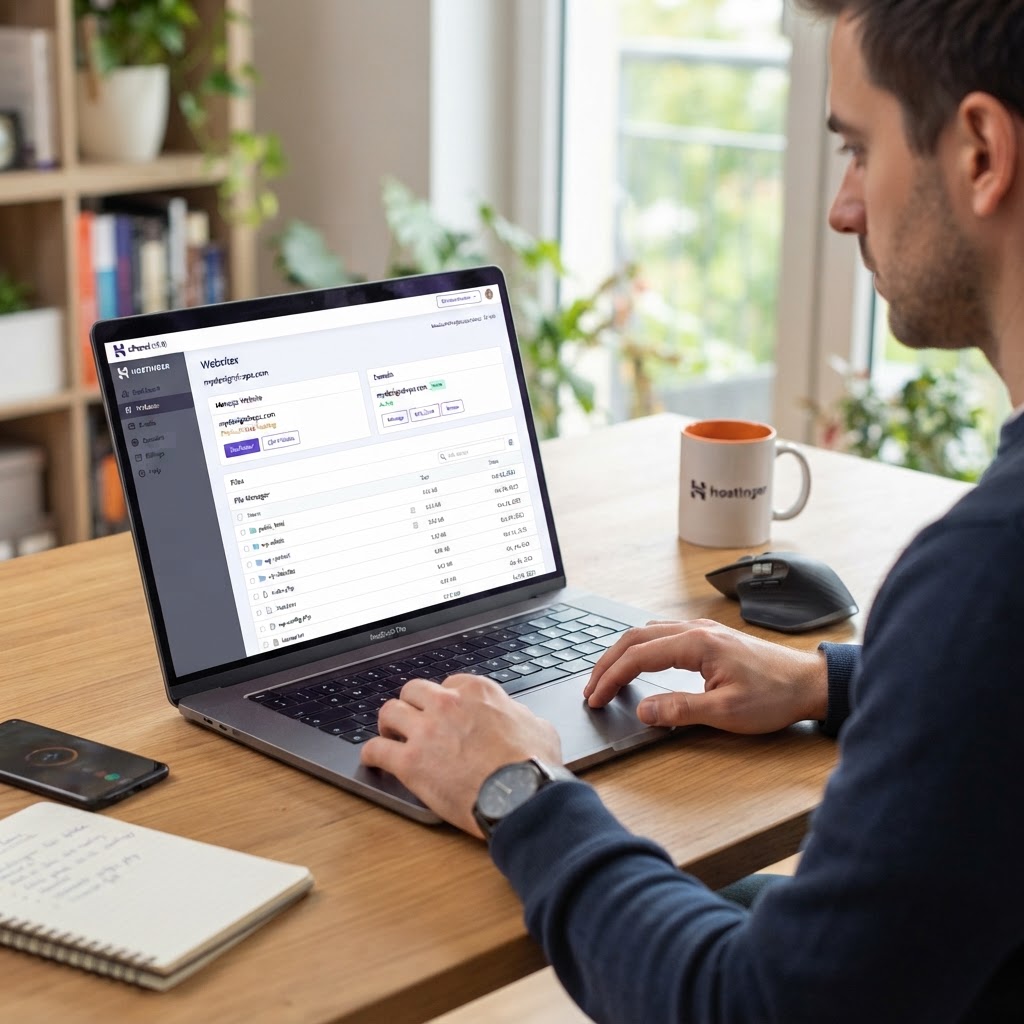
Managing two domains from one Hostinger panel
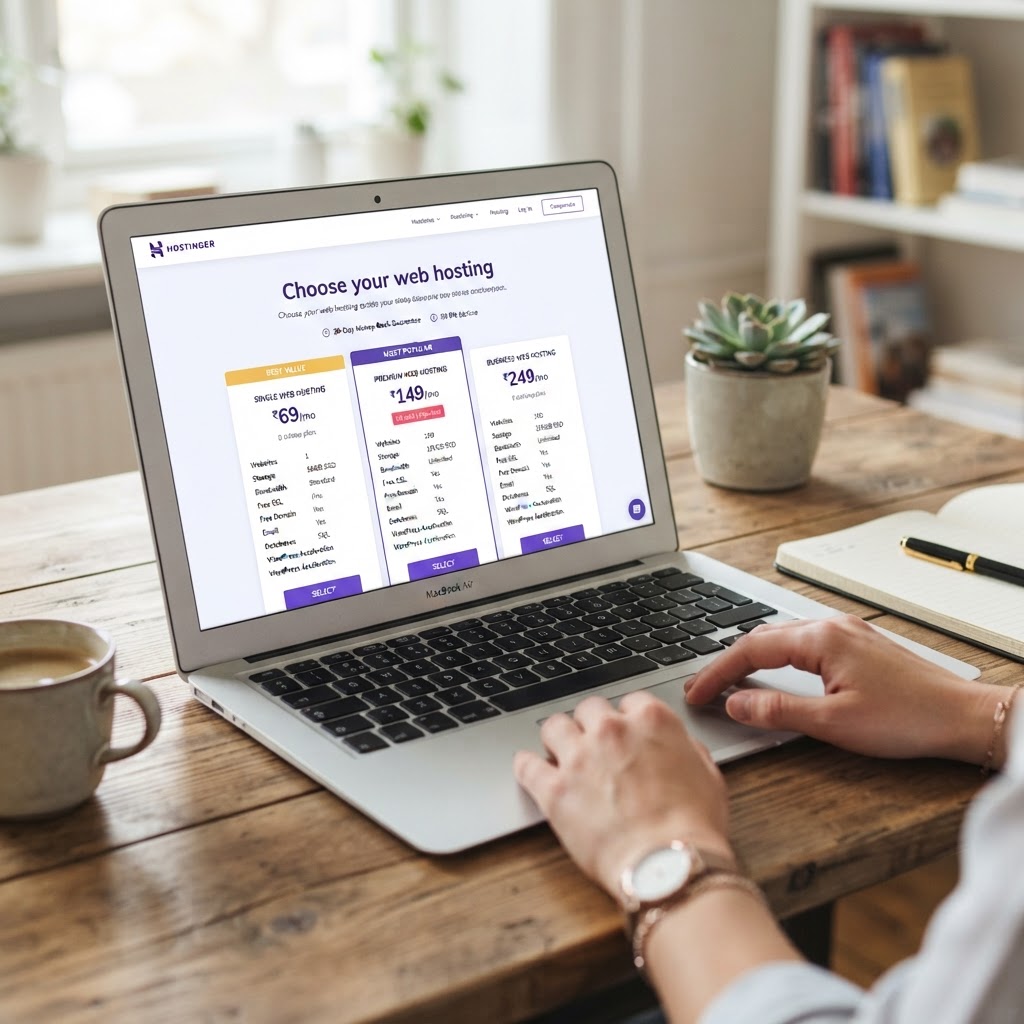
Hostinger pricing ( the hosting bill that started it all
vitaladge.com shop
Inside Numbers Nobody Talks About
Here's what it actually costs to run vitaladge.com and vitaladge.site simultaneously:
Domain registration: vitaladge.com costs $12 per year through Hostinger. vitaladge.site costs $8 per year through Namecheap. That's $20 per year for two domain names.
Hosting: Hostinger Business plan is R89 per month, which is about $5 per month, or $60 per year. vitaladge.site is hosted on Blogger, which is free. Total hosting: $60 per year.
WordPress plugins: The free versions of WooCommerce, All in One SEO, Akismet, Jetpack, LiteSpeed Cache, and WPForms Lite cost nothing. But I needed the premium version of WPForms for the contact form ($39 per year) and the customer reviews plugin for WooCommerce ($49 per year). Total plugins: $88 per year.
Meta Verified: R209.99 per month for the Facebook page, about $12 per month, or $144 per year.
GetResponse: The email marketing platform I was using for the sequence nobody subscribed to. $15.60 per month with my 40% affiliate discount, or $187 per year.
Edge TTS: Free. ffmpeg: Free. YouTube API: Free (within quota limits). Pexels API: Free. Blogger API: Free. These are the tools that don't cost money, and they're the ones doing the most work.
Exness trading account: $100 initial deposit. VPS for the trading bot: $5 per month, or $60 per year. Total trading: $160.
Fiverr: Free to list, 20% commission on each sale. No upfront cost.
Base44: The Superagent platform. Varies by plan, but roughly $20-30 per month in credit costs, or about $300 per year.
Total annual cost: approximately $1,059. Over R19,000. For a business that, in its first six months, earned $42.50 in affiliate commissions.Before Math That Almost Broke Meh2>
$1,059 in costs. $42.50 in revenue. That's a loss of $1,016.50 in the first six months. I was spending $170 a month to run a business that earned $7 a month. The space between what I was spending and what I was earning was not a gap : it was a canyon.
The rational response to these numbers is obvious: stop. Cut your losses. Get a job. Spend your R89 a month on data or groceries or literally anything that provides a tangible return. And I considered it. Every month, when I tallied up the costs and compared them to the revenue, the rational voice in my head got louder.
But But think about it about costs in an online business: most of them are fixed, not variable. The domain registration costs the same whether I have one visitor or ten thousand. The hosting costs the same whether I publish one blog post or three hundred. The plugin subscriptions cost the same whether I have zero customers or a hundred. The fixed cost structure means that the marginal cost of each additional visitor, each additional blog post, each additional product is essentially zero. The only thing standing between me and profitability was scale.
I Two-Domain Problem
m
Running two domains was a strategic decision that doubled my costs without doubling my revenue. vitaladge.com was the money site , the WooCommerce store with affiliate products, the blog with SEO content, the ViralForge page. vitaladge.site was the AdSense play . the Blogger blog with geography articles designed to pass Google's content quality guidelines.
The theory was that each domain would serve a different purpose: vitaladge.com would generate affiliate revenue, and vitaladge.site would generate AdSense revenue. Two income streams, two domains, two platforms. Diversification.
In practice, vitaladge.com started generating affiliate commissions (small, but real), while vitaladge.site was rejected by AdSense twice. I was paying for two domains but only one was producing income. The geography blog was consuming time , writing 250 articles is not free even if the platform is . without producing any revenue. It was an investment in future AdSense approval that might never come.
The question was whether to keep funding vitaladge.site while waiting for AdSense approval, or to cut it and focus all resources on vitaladge.com. The sunk cost fallacy said keep going , I'd already written 250 articles, surely AdSense would approve eventually. The rational analysis said cut it . $8 a year for the domain was cheap, but the time investment was enormous, and I could redirect that energy into vitaladge.com content.Before Hidden Cost: Time/h2>
The financial cost of running two domains is easy to calculate. The time cost is harder to measure but far more significant. Every hour I spent writing a geography article for vitaladge.site was an hour I didn't spend writing a product review for vitaladge.com. Every hour I spent debugging the Blogger ads.txt issue was an hour I didn't spend optimizing my WooCommerce store. Every hour I spent researching AdSense policies was an hour I didn't spend applying for new MaxBounty campaigns.
Opportunity cost is the invisible expense that doesn't show up on a spreadsheet. It's the cost of the thing you didn't do because you were doing something else. And for six months, the opportunity cost of vitaladge.site was the content I could have been creating for vitaladge.com ( content that would have directly generated affiliate commissions instead of waiting for an AdSense approval that kept getting rejected
Inside Decision to Keep Both
th
I kept both domains. Not because the math justified it, but because the long-term vision did. vitaladge.com was building momentum : 250 blog posts, 197 products, growing organic traffic. vitaladge.site was building an asset , 250 geography articles that, if AdSense ever approved, would generate passive display ad revenue for years. The articles were already written. The domain was already paid for. The ongoing cost was essentially zero.
The decision was a bet: that the fixed costs would eventually be covered by the scale of the content. That 250 blog posts on vitaladge.com would eventually generate enough traffic for consistent affiliate commissions. That 250 geography articles on vitaladge.site would eventually pass AdSense's review. That the $1,059 in annual costs would, within twelve to eighteen months, be exceeded by monthly revenue.
It was not a safe bet. But it was an informed one. I knew the costs. I knew the revenue. I knew the gap. And I decided that the gap was closable . not with more spending, but with more time. The content I'd already created was an asset that would compound. Every blog post was a permanent entry point for search traffic. Every product page was a permanent affiliate link. The infrastructure was built; it just needed time to accumulate value.
What I'd Tell Someone Starting Out
If I could go back to day one, I'd say this: start with one domain. Not two. One. Pick the strategy with the clearest path to revenue , in my case, affiliate marketing on vitaladge.com . and put everything into it. Don't split your attention across two platforms, two strategies, two revenue models until the first one is profitable. The two-domain strategy cost me six months of divided focus and $8 a year in extra domain fees. The $8 was nothing. The six months was everything.
But I'd also say this: the costs are real but temporary. The domain registration is annual. The hosting is monthly. The plugins are yearly. But the content is permanent. The 250 blog posts I wrote will still be generating traffic in five years. The 197 products will still be earning commissions as long as the affiliate links work. The cost of creating them was high — in time, in money, in sanity — but the cost of maintaining them is almost nothing.
Running two domains with no profit is painful but not permanent. It's the startup phase that every business goes through, compressed into a domain name and a hosting bill. The question isn't whether you can afford it. The question is whether you can outlast it. And that's not a financial question — it's a psychological one.
The Unseen South African Overhead Costs
While online influencers love to market the dream that starting a digital business costs "zero dollars," the financial reality on the ground in Johannesburg tells a very different story. Running vitaladge.com on WordPress/Hostinger alongside vitaladge.site on Blogger involved a constant stream of hidden operational expenses that quietly chipped away at my Capitec bank account every single month.
First, international payment processing fees added up quickly. Every time Hostinger billed my card for hosting (R89/month) or Namecheap billed for domain renewals ($8 to $12 per year), Capitec Bank charged cross-border transaction fees of R15 to R25 per transaction. Second, load shedding created significant secondary expenses. When rolling power outages knocked out my home Wi-Fi router, I had to purchase emergency 5GB or 10GB mobile LTE data bundles from Vodacom or MTN at R149 to R249 a pop just to keep my build scripts and site updates running on schedule. Add electricity costs for keeping laptops and backup power units charged, and my monthly baseline burn rate hovered between R850 and R1,100—all coming directly out of my personal pocket with zero incoming revenue for the first six months.
Here is the exact monthly cost breakdown I logged in my notebook during those early months:
- Hostinger Business Hosting: R89.00
- International Bank Card Fees: R35.00
- MTN / Vodacom LTE Backup Data Bundles: R398.00
- Domain Renewal Amortization (2 domains): R30.00
- Software / API micro-subscriptions: R280.00
- Electricity and charging overhead: R200.00
Total Monthly Baseline Burn: R1,032.00
Why Two Domains Instead of One?
People often ask why I bothered maintaining two distinct domain names—vitaladge.com and vitaladge.site—instead of consolidating everything under one URL. The decision was rooted in technical risk management and cost control strategy.
vitaladge.com was built on WordPress to handle my WooCommerce affiliate product store, custom PHP redirect scripts, and heavy SEO keyword targeting. However, WordPress requires active monthly hosting fees and ongoing database optimization. Conversely, vitaladge.site was hosted on Google's free Blogger platform, serving as a lightweight, zero-hosting-cost diary blog where I documented my daily founder journey. If cash flow ever became so tight that I had to temporarily pause paid hosting on the main site, vitaladge.site would remain live indefinitely on Google's global infrastructure without costing me a single rand in server fees.
Having that zero-cost fallback gave me immense peace of mind. It ensured that no matter how difficult my financial situation got in the short term, my online presence and core written content would never be wiped off the web due to an unpaid server bill.
The Mindset Required to Outlast Zero-Revenue Months
Surviving months of zero revenue while paying recurring hosting and data bills requires strict financial discipline and emotional stamina. I cut out all unnecessary personal expenditures—no weekend dining out in Sandton or Rosebank, no buying R45 takeaway coffees, and making simple meals at home every day.
I reframed how I viewed those hosting bills: I wasn't throwing money away; I was buying another 30 days of runway to build digital real estate that I fully owned. In South Africa, where youth unemployment numbers are daunting, building digital assets is one of the few fields where leverage can be created entirely out of skill, time, and focus. The financial cost of maintaining two domains was real, but the long-term cost of giving up was far higher. Outlasting the zero-revenue phase isn't a test of capital; it's a test of pure psychological endurance.


Comments
Post a Comment